The Psychology of the Hunt
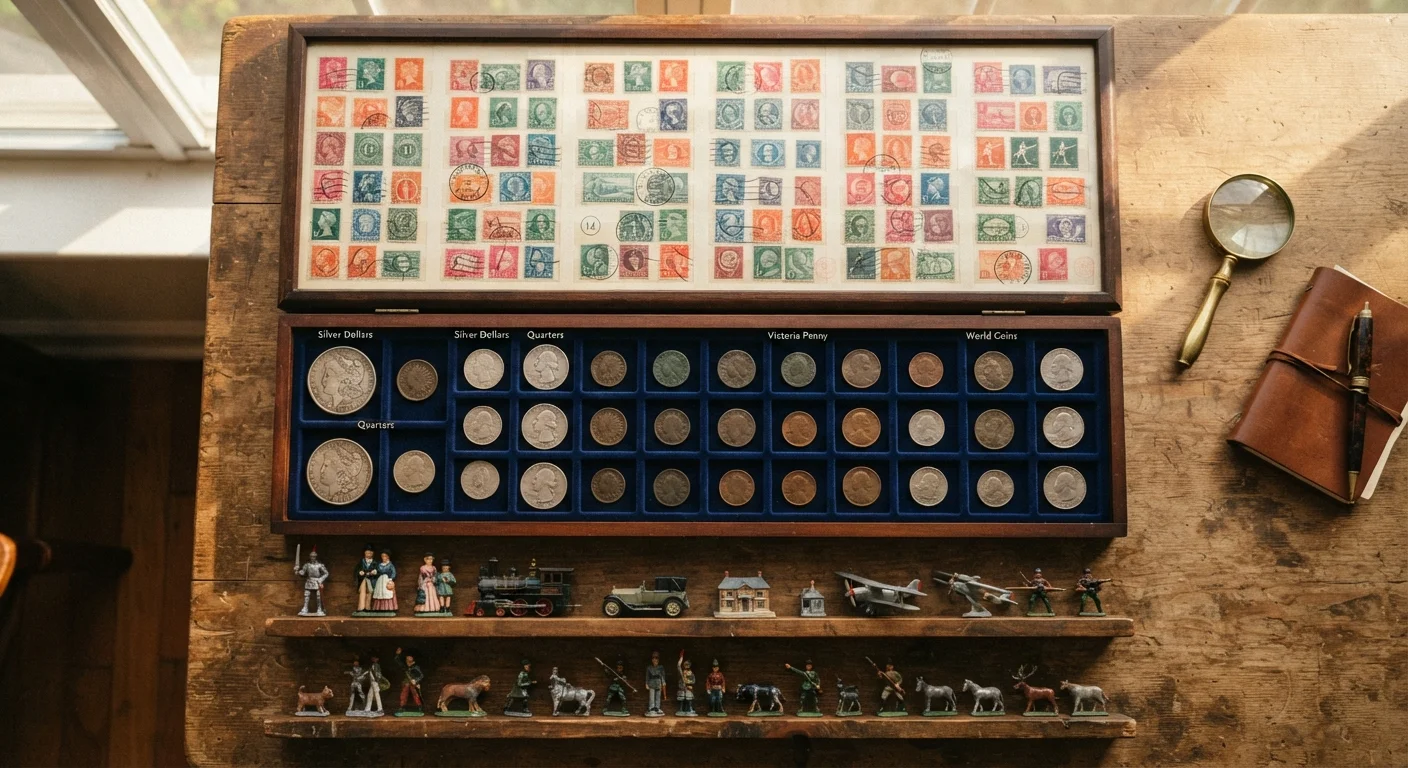
Ask most collectors what they love about their hobby, and many won't point to the objects themselves - they'll describe the search. The anticipation of finding a rare stamp at a flea market, or spotting an underpriced first edition at a used bookstore, triggers a genuine neurological response. Dopamine, the neurotransmitter associated with reward and motivation, rises during the pursuit of a desired object, not just upon acquiring it. This is sometimes called the anticipation effect, and it helps explain why collectors often feel most alive mid-hunt.
This reward cycle keeps the hobby engaging over time. Once a collector acquires one item, the category expands and the search continues. Psychologists describe this as an open-ended goal structure - unlike finishing a book or completing a race, a collection is never truly done, which sustains motivation indefinitely.
1 in 3
American adults who identify as collectors
Various surveys on leisure behavior have estimated that roughly one-third of U.S. adults collect something, from sports memorabilia to houseplants.
68%
Collectors motivated primarily by personal enjoyment
Consumer research consistently finds the majority of collectors cite enjoyment and passion - not investment potential - as their primary motivation.
Childhood
Most common starting point for lifelong collectors
Studies on collecting behavior indicate that most adult collectors trace their interest to a collection they began or inherited before the age of 12.
Identity, Memory, and the Meaning of Objects
Objects carry stories. A vinyl record collection might represent a teenager's first taste of musical independence; a display of vintage baseball cards might reconnect an adult to a childhood spent at the ballpark with a grandparent. Psychologists who study material culture note that people often use possessions to construct and communicate identity - collecting is an intentional, curated version of this universal tendency.
This connection to memory is part of why collectors rarely describe their hobby as trivial, even when outsiders might. The items themselves become anchors for personal history. Collecting also offers a sense of continuity and control - particularly appealing during uncertain periods of life. Organizing, cataloguing, and expanding a collection provides structure and predictability in a way few other hobbies do.
The creative and identity-building dimensions of collecting share common ground with other hands-on pursuits. Our piece on why creativity feels good explores how making and curating objects affects mood and self-perception in similar ways.
“Possessions are a part of the extended self. We use our possessions to tell others - and ourselves - who we are.”
— Russell Belk, Consumer behavior researcher, known for foundational work on the concept of the 'extended self'
Community, Competition, and Shared Passion
Collecting is frequently portrayed as a solitary activity, but the reality is far more social than the image of a lone hobbyist in a quiet room suggests. Collector communities - whether centered on vintage watches, comic books, rare sneakers, or antique maps - tend to be knowledgeable, welcoming, and deeply engaged. Swap meets, online forums, auction events, and local clubs all serve as gathering points.
Within these communities, a healthy element of friendly competition often emerges: who can find the most complete set, the rarest variant, or the most unusual piece. This social dimension adds another layer of motivation beyond the objects themselves. Understanding the dynamics of why hobby communities cohere so strongly is also examined in our overview of solo pastimes versus group activities.
A retired teacher spends weekends searching estate sales for vintage postcards depicting American national parks, carefully cataloguing each one by decade and region.
A 30-something software developer builds a vinyl record collection focused exclusively on 1970s soul music, trading duplicates with an online community of fellow enthusiasts.
A teenager begins collecting vintage video game cartridges, starting with games their parents played and gradually learning about hardware history.
A nurse collects small ceramic animals from different countries, often acquired during travel or received as gifts, displayed on a single dedicated shelf.
Getting Started Without Overthinking It
One of collecting's most accessible qualities is its flexibility. Almost any interest - music, history, nature, sports, art, cuisine - has a collectible dimension. Starting small is both practical and psychologically sound: the early phase of a collection, when every find feels significant, tends to be among the most enjoyable.
Budget is rarely a barrier in the way newcomers often assume. Many rewarding collections are built entirely on thrifted, inherited, or inexpensive items. The value of a collection is largely personal. If you find yourself hesitating to start for fear of doing it wrong, consider reading our article on common myths about adult hobbies - many of the same misconceptions apply to collecting specifically.
Once the habit forms, maintaining consistent engagement becomes the main challenge. The strategies covered in our guide on building a hobby habit that sticks translate directly to collecting, especially during slower phases when exciting finds are rare.