What Social Science Actually Says About Leisure and Recharging
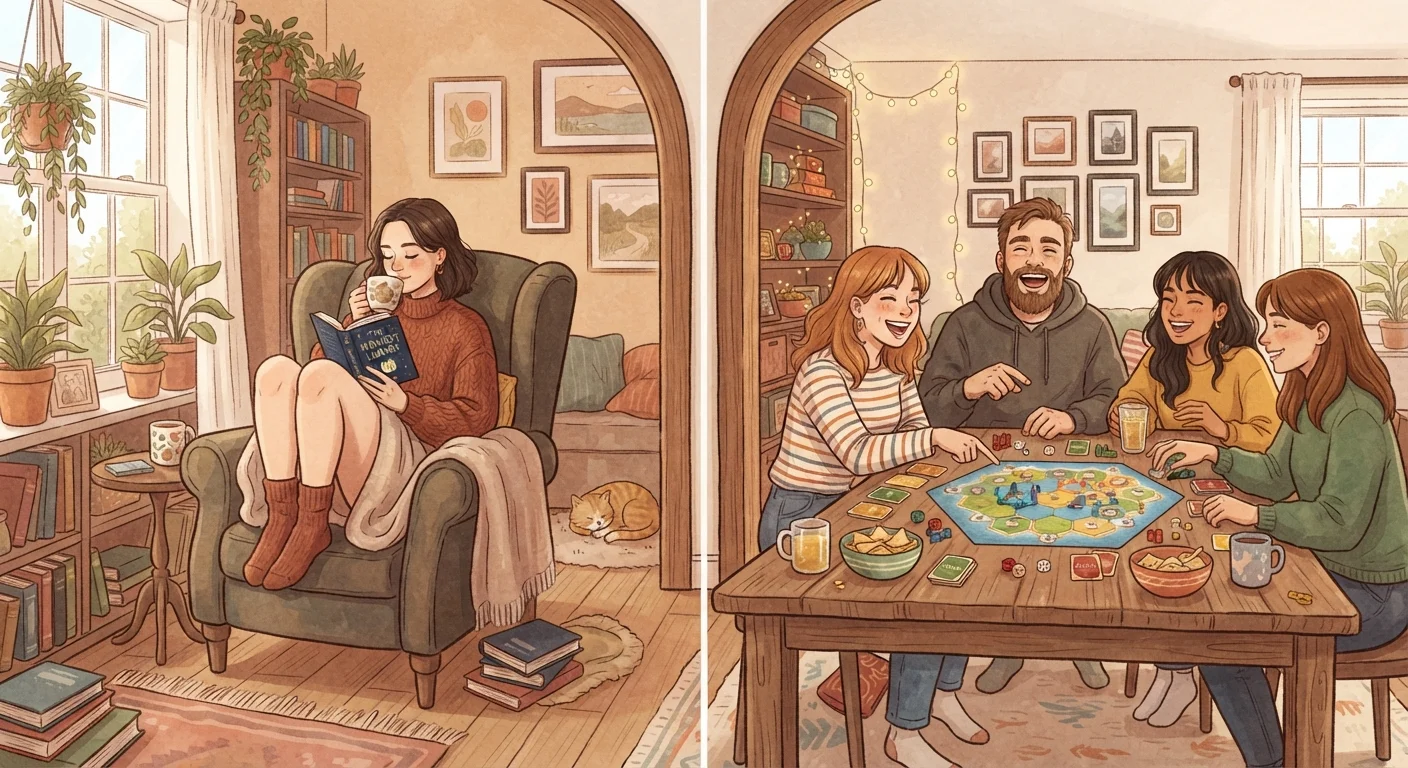
The idea that leisure is simply "free time" understates how deliberately most people choose their pastimes. Researchers in positive psychology and social science have long examined why certain activities leave people feeling restored while others leave them flat - and the answer has a lot to do with the social structure of the activity itself.
At the center of this research is the concept of psychological restoration - the process by which mental and emotional resources depleted by daily demands are replenished. Two widely studied theories frame this process: Attention Restoration Theory, which emphasizes environments that allow the mind to wander freely, and Stress Recovery Theory, which focuses on emotional unwinding. Both can apply to solo and group settings, but each format has distinct advantages depending on the person and moment.
See how Americans spend their leisure hours for a broader picture of which pastimes people actually gravitate toward.
| Criterion | Solo Pastimes | Group Activities |
|---|---|---|
| Primary psychological benefit | Restoration, self-reflection, flow | Belonging, social connection, shared identity |
| Best suits | Introverted personalities; high-stress schedules | Extraverted personalities; people seeking community |
| Scheduling flexibility | High - entirely self-directed | Lower - requires coordinating with others |
| Motivation & accountability | Self-generated; can wane without structure | Socially reinforced; harder to skip |
| Skill development pace | Often faster due to focused solo practice | Supported by peer feedback and observation |
| Risk of loneliness | Higher if it becomes the only leisure format | Lower - regular social contact built in |
| Creative freedom | Maximum - no group consensus needed | Shaped by group dynamics and shared goals |
The Psychology of Going It Alone
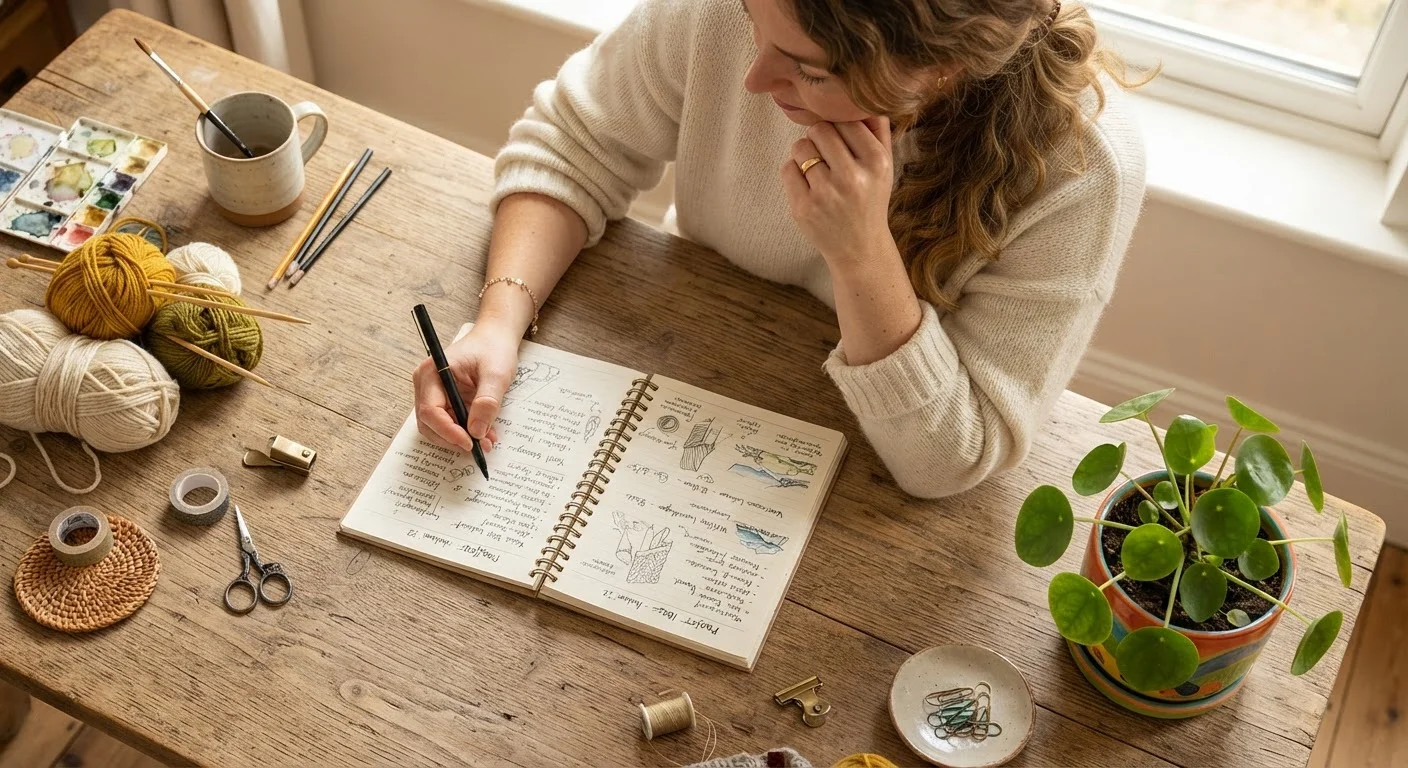
Solo pastimes - reading, drawing, gardening, journaling, solo hiking, collecting - share a defining feature: the experience is shaped entirely by the individual. There are no group dynamics to navigate, no schedules to coordinate, no social performance required. For many people, this is precisely the point.
Psychological research on solitude distinguishes between unwanted loneliness and chosen aloneness. When solitude is voluntary, it is reliably associated with self-reflection, creative thinking, and emotional regulation. Studies examining why people collect objects, for instance, suggest that solo engagement with a meaningful collection can reinforce a person's sense of identity and continuity. You can explore that thread further in our article on the psychology behind collecting as a hobby.
Solo activities also tend to support what psychologists call flow - a state of deep, absorbing concentration described by researcher Mihaly Csikszentmihalyi. Flow is easier to enter when external interruptions are minimal, making solo pursuits a natural fit for this kind of focused engagement.
~26%
Americans who report always or often feeling lonely
A 2023 report from the U.S. Surgeon General highlighted loneliness as a significant public health concern, underscoring why social leisure carries genuine wellbeing implications.
5+ hrs
Average weekly leisure time for U.S. adults
According to the Bureau of Labor Statistics American Time Use Survey, adults typically have several hours of leisure daily, though how that time is structured varies widely by age and employment status.
~80%
Adults who say hobbies reduce their stress
Surveys on leisure and wellbeing consistently find that intentional hobby engagement - whether solo or social - is widely reported as a meaningful stress buffer by American adults.
The Social Pull: Why Group Activities Work Differently
Group activities operate on fundamentally different psychological mechanisms. Humans are social by nature - belonging to a group, feeling recognized within it, and contributing to a shared goal all activate reward systems in the brain. Research in social psychology consistently shows that perceived social connection is one of the strongest predictors of subjective wellbeing.
Team sports, group fitness classes, community theater, and cooperative games all create what sociologists call social capital - the networks of relationships and mutual trust that accumulate through repeated interaction. Beyond the obvious enjoyment, these contexts tend to build accountability (showing up for others), communication skills, and a sense of shared identity.
For people exploring how social leisure fits into physical activity, recreational sports patterns across different life stages show how group play shifts meaningfully with age. Group activities also carry one practical advantage: they're harder to quietly abandon. The social commitment itself becomes a motivational force.
Personality, Context, and the Case for Mixing Both
Introversion and extraversion - personality dimensions that describe how people gain and spend social energy - are perhaps the most relevant individual differences here. Introverts are not antisocial; they simply tend to find unstructured socializing more draining than solitary engagement. Extraverts often report that too much solo time leaves them restless. Neither orientation is healthier; both reflect normal variation in human wiring.
Context also shifts the equation considerably. Running is a solo pursuit for many, yet running clubs transform it into a social ritual. Knitting is typically quiet and personal, but knitting circles make it communal. The activity itself doesn't dictate the format - you do. This flexibility is worth remembering if you find that a hobby you love is starting to feel isolating, or conversely, that a group activity is becoming more stressful than enjoyable.
Most behavioral researchers suggest that a blend of both formats across the week tends to serve overall wellbeing better than an exclusive commitment to one. If you're weighing which format to pursue, our practical self-assessment before starting a hobby can help you think through your motivations clearly. And for those curious how creative pursuits specifically change when shared, solo versus community-based creative practice is worth a read.