Why Most Creative Hobby Attempts Stall
Creative hobbies have one of the higher abandonment rates among leisure pursuits. Craft supply stores and online tutorials make starting feel easy - and that low friction is part of the problem. People buy full kits, watch a few videos, and then find the medium doesn't match how they actually like to spend an evening. The supplies sit unused, and the experience quietly discourages future attempts.
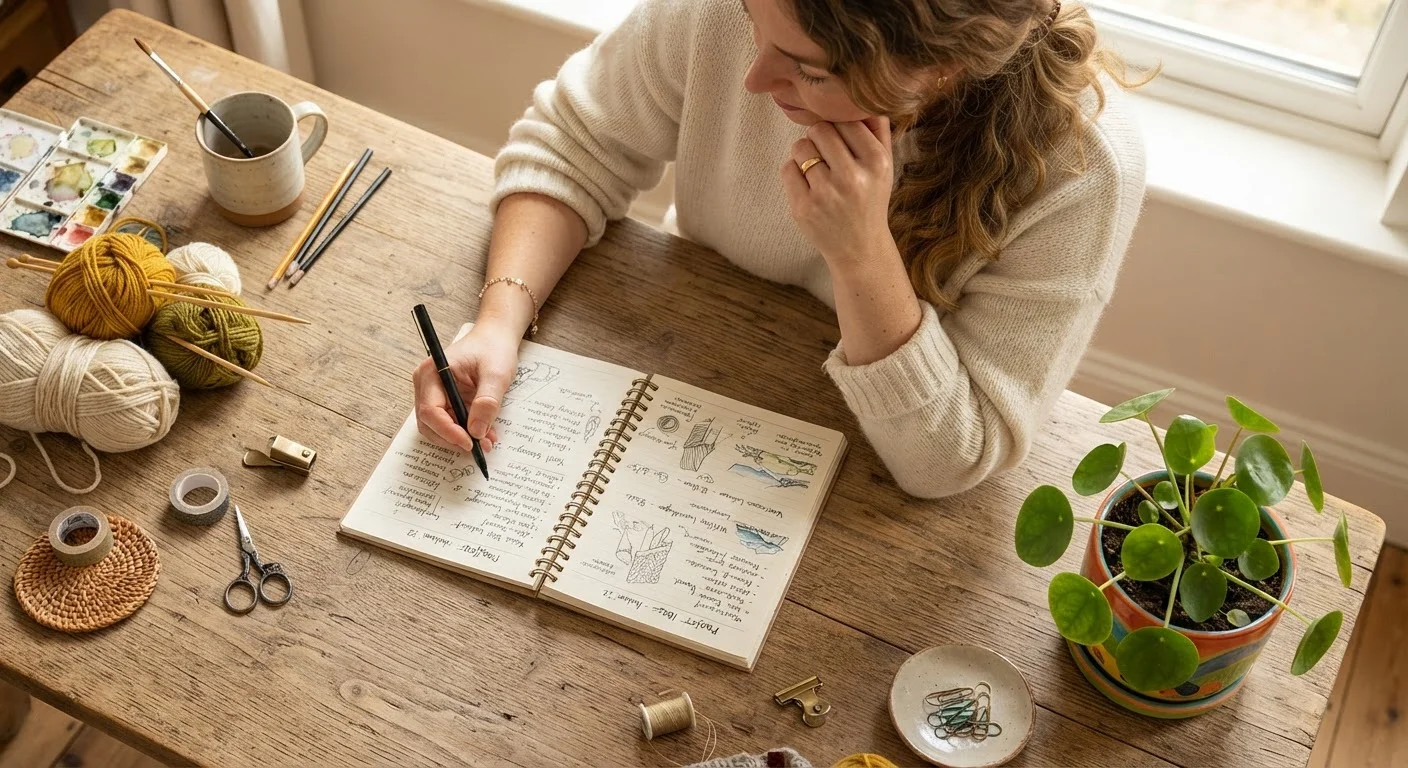
The gap isn't usually ability. It's fit. A person who enjoys process and patience may thrive with oil painting or hand lettering. Someone who prefers quick feedback and portability might do better with sketching or digital illustration. Before spending money or carving out time, it pays to honestly assess what kind of creative experience you're looking for. Our readiness checklist walks through the key questions in structured form if you'd like a more systematic approach.
Start With Curiosity, Not Commitment
The early exploration phase of a creative hobby should feel light and low-stakes. Give yourself explicit permission to try something, decide it's not the right fit, and move on without judgment. The goal at the start is information-gathering, not mastery.
What to Consider Before You Commit
Four factors reliably predict whether a creative hobby will stick: time availability, physical space, budget, and learning preference. Working through each one before making purchases is the most effective way to avoid the common pitfall of an expensive, regretted starter kit.
- Time: Some mediums - oil painting, pottery, complex fiber arts - require longer uninterrupted sessions because of drying times, setup, or cleanup. If your schedule runs in 20-30 minute windows, a medium with a faster feedback loop, like sketching or digital art, may be more compatible.
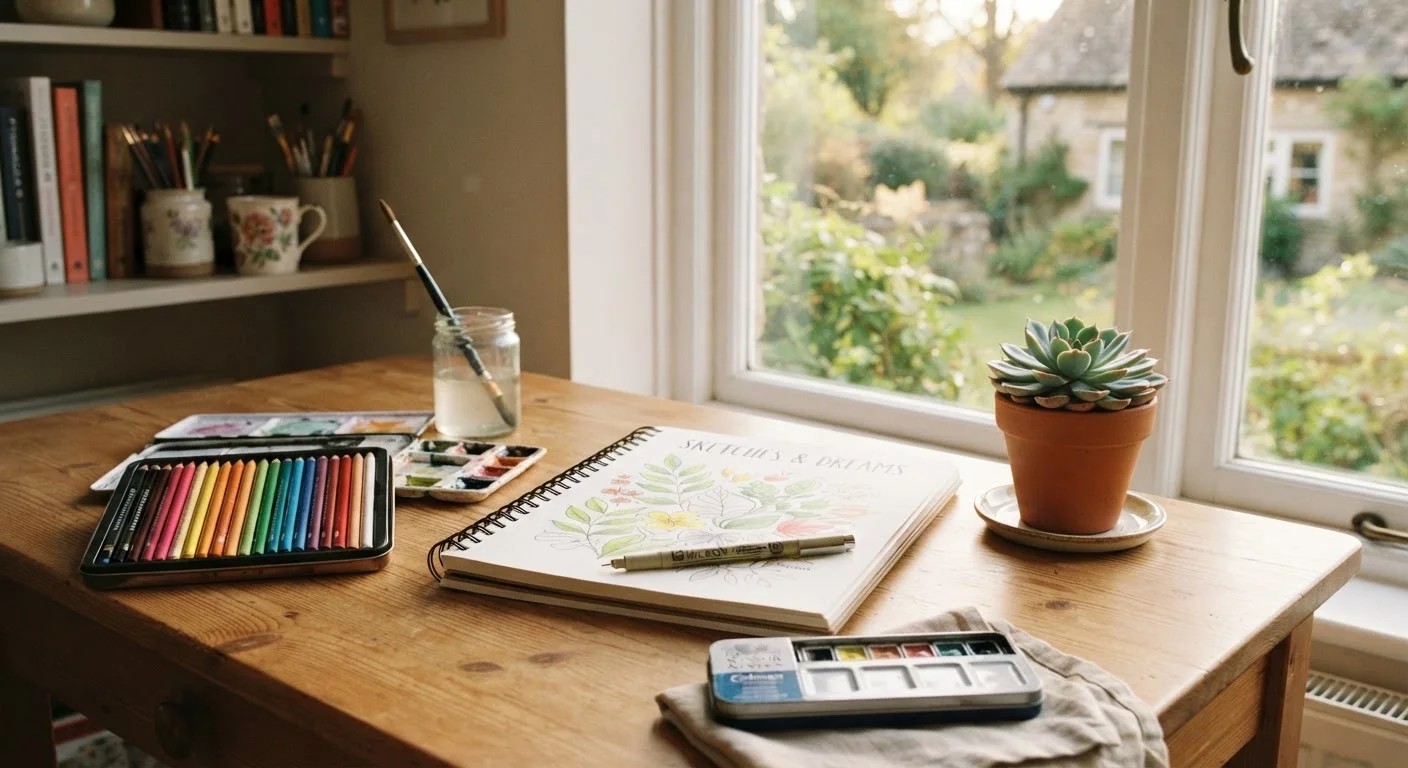
- Space: Sculpture and printmaking require dedicated workspace and ventilation. Watercolor and journaling can work at a kitchen table. Be honest about what you can realistically set up and put away regularly.
- Budget: Entry costs vary widely. Sketching requires little beyond paper and pencils. Oil painting, weaving, or ceramics involve more significant upfront investment in materials or equipment. Starting lean - borrowing supplies, visiting a community studio, or taking a single beginner class before buying - is consistently the smarter first move.
- Learning style: Some people absorb technique through structured instruction; others learn by experimenting freely. Your preference shapes whether a class, a book, or unstructured practice will serve you better early on.
If you're weighing a screen-based versus traditional approach, this honest comparison of analog and digital creative paths covers the real trade-offs for hobbyists.
Avoid the Full Starter Kit Trap
Comprehensive beginner kits are heavily marketed to new hobbyists and often include far more than you'll use in the first several months. They make it easy to spend significantly before you know whether you'll continue. Start with the minimum viable set of materials and expand only after consistent practice confirms the hobby is a good fit.
How to Test a Medium Without Overcommitting
The single most reliable way to avoid wasted spending is to try before you buy in earnest. Several low-cost or no-cost options make this easier than most beginners realize:
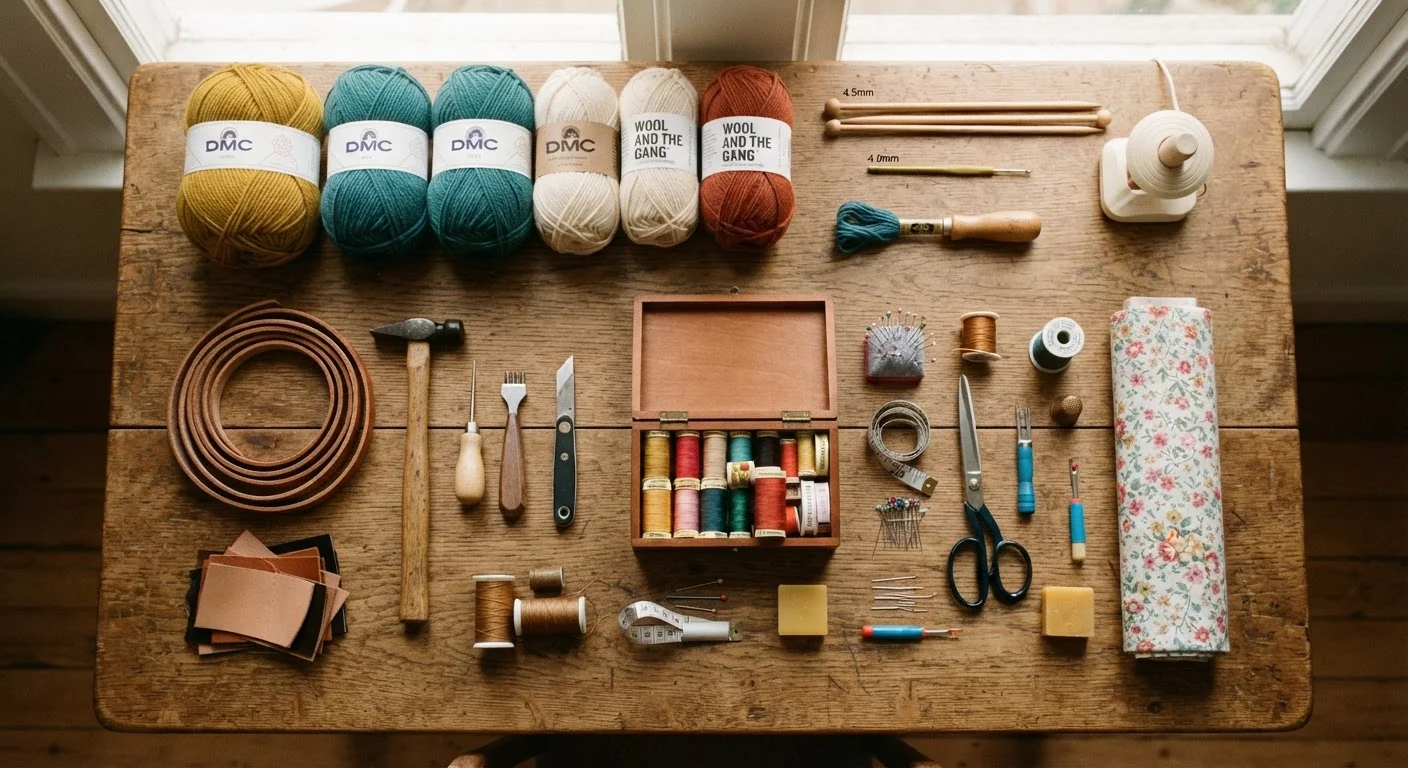
What you will need
Community art centers and libraries frequently offer drop-in workshops or short beginner sessions for a modest fee. These give you actual hands-on time with materials and instruction without purchasing anything yourself. Maker spaces and local art collectives sometimes host open studio nights where you can try equipment - a pottery wheel, a screen-printing setup - before deciding it's worth pursuing further.
If in-person options are limited, borrowing supplies from a friend or family member, or purchasing a very small quantity of materials to run a single focused experiment, keeps the financial commitment minimal. The goal is to generate enough direct experience to answer one question: does this medium feel engaging enough to keep going?
For a broader look at what to expect across creative arts categories as a beginner, this practical primer is a useful companion read before you settle on a direction.
Building a Sustainable Practice From the Start
Once you've identified a medium that feels right, the next challenge is turning initial enthusiasm into a durable habit. A few structural decisions made early on have a meaningful effect on longevity.
Set a modest, consistent schedule. Two or three focused sessions per week, even if short, build skill and momentum more reliably than sporadic long sessions. Treat the time as a standing appointment rather than something that happens when inspiration strikes.
Define a realistic supply baseline. Identify the minimum set of materials needed to practice meaningfully, and resist expanding beyond that until you've used what you have. Accumulating supplies faster than you use them adds clutter and subtle pressure that can work against enjoyment.
Find at least one source of community. Whether it's a local group, an online forum, or a single friend who shares the interest, external connection provides accountability, honest feedback, and access to shared knowledge and resources. Creative hobbies practiced in complete isolation tend to stall more often.
For a thorough, end-to-end view of what sustaining a creative hobby actually looks like over time - including managing supplies, navigating creative blocks, and finding community - see everything that goes into a sustainable creative hobby.