
Why a Packing Checklist Matters Before Every Hike
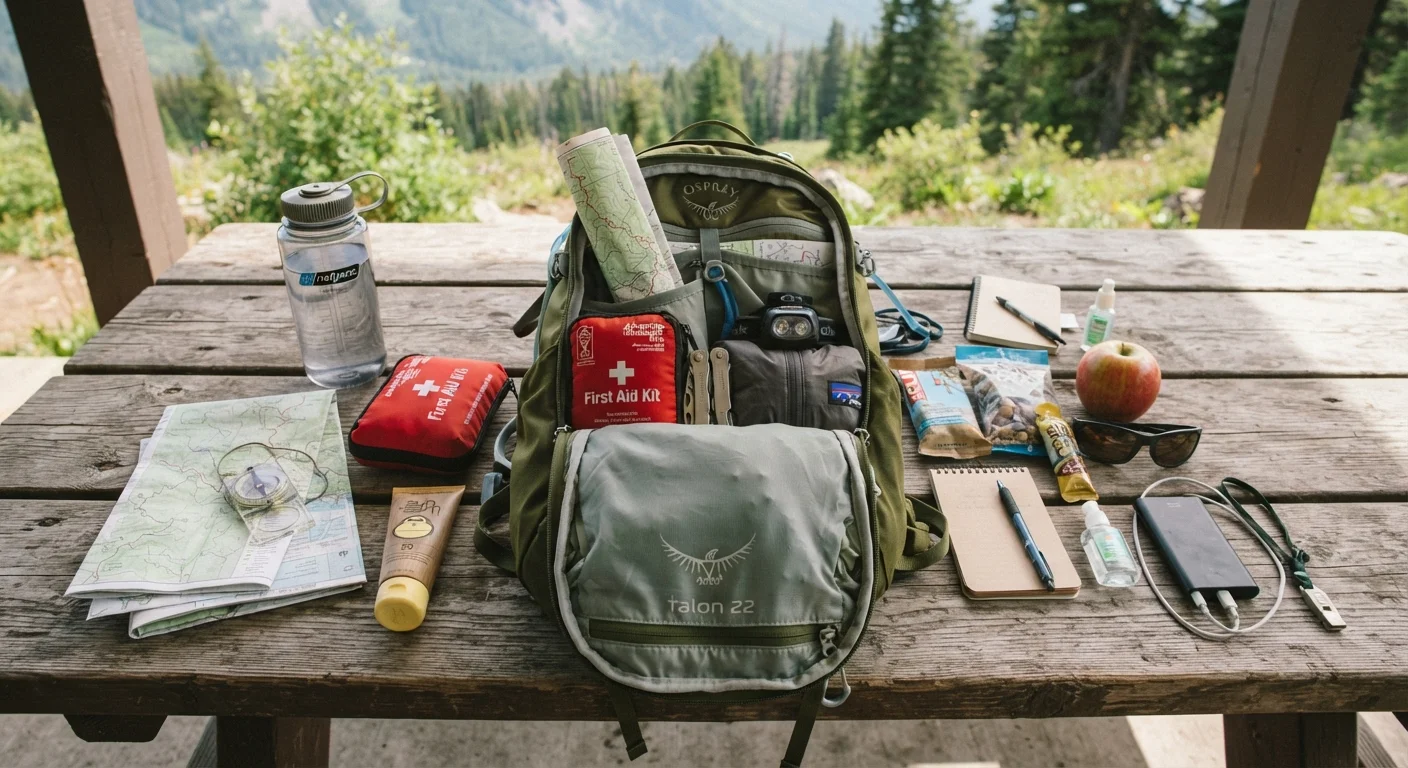
Even experienced hikers benefit from running through a checklist before leaving the trailhead parking lot. The outdoors doesn't offer second chances on forgotten essentials - there's no convenience store two miles into a wilderness trail. Whether you're heading out for a casual three-mile loop or a full-day ridge walk, the categories of gear you need remain largely the same. What changes is scale, not substance.
The items in this checklist draw from the well-established "Ten Essentials" framework - a set of gear categories that outdoor educators and search-and-rescue professionals have long recommended. It isn't a rigid brand list; it's a functional approach to preparedness. For a deeper look at what changes when you add an overnight stay, see our comparison of day hiking vs. backpacking.
Navigation
Hydration and Nutrition
Clothing and Sun Protection
Safety and Emergency Items
Tools and Resources You'll Want Before You Go
Carrying the right physical gear is only part of the picture. Several digital and informational resources help you prepare before you ever lace up your boots. A downloaded offline map of your trail, a weather forecast checked the morning of your hike, and a shared itinerary with someone at home are all low-effort steps with outsized safety payoffs.
If you're heading out alone, the stakes are higher. Our guide on planning a safe solo hike covers communication protocols and route preparation specific to solo travel. And if reading topographic maps feels like a foreign language, the guide to reading topographic maps is a practical starting point.
Offline mapping app (e.g., smartphone with downloaded trail maps)
Provides GPS navigation without requiring cellular connectivity on the trail.
Paper topographic map
Serves as a reliable navigation backup that requires no battery or signal.
Water filter or purification tablets
Allows you to safely treat natural water sources and extend your hydration supply.
Personal locator beacon (PLB) or satellite communicator
Sends an emergency distress signal or two-way message from locations with no cell coverage.
Headlamp with spare batteries
Ensures visibility if your hike extends into low-light conditions unexpectedly.
Trekking poles
Reduce knee strain on descents and improve stability on uneven or wet terrain.
Don't Rely on Cell Signal for Navigation
Smartphone mapping apps work well - but only with a downloaded offline map. Many popular trails pass through areas with no cellular service, and a map that requires data to load becomes useless exactly when you need it most. Always download the relevant trail map to your device before leaving home, and treat it as a supplement to a physical paper map, not a replacement.
After the Hike: Gear Care and Trip Debrief
Once you're back at the trailhead, take five minutes to inventory what you used, what felt missing, and what you could trim on the next outing. Refill your water reservoir, restock first aid supplies you used, and hang any damp clothing to dry before packing it away - moisture left in a pack leads to mildew and degraded gear over time.
A quick debrief also sharpens your judgment for future trips. Did the trail take longer than expected? Were you underdressed for the afternoon temperature drop? These observations are more valuable than any gear review. If you're new to outdoor recreation more broadly, a plain-language introduction to outdoor hobbies offers helpful context for building these habits from the start.
Tell Someone Your Plan Before You Go
Leaving a detailed trip plan with a reliable contact is one of the highest-value safety steps a hiker can take, and it costs nothing. Include the specific trail name and trailhead location, your planned route, the number of people in your group, and your expected return time. Agree on a check-in time and what action your contact should take if they don't hear from you. This single step has been credited by search-and-rescue teams with dramatically improving response times in real emergencies.