
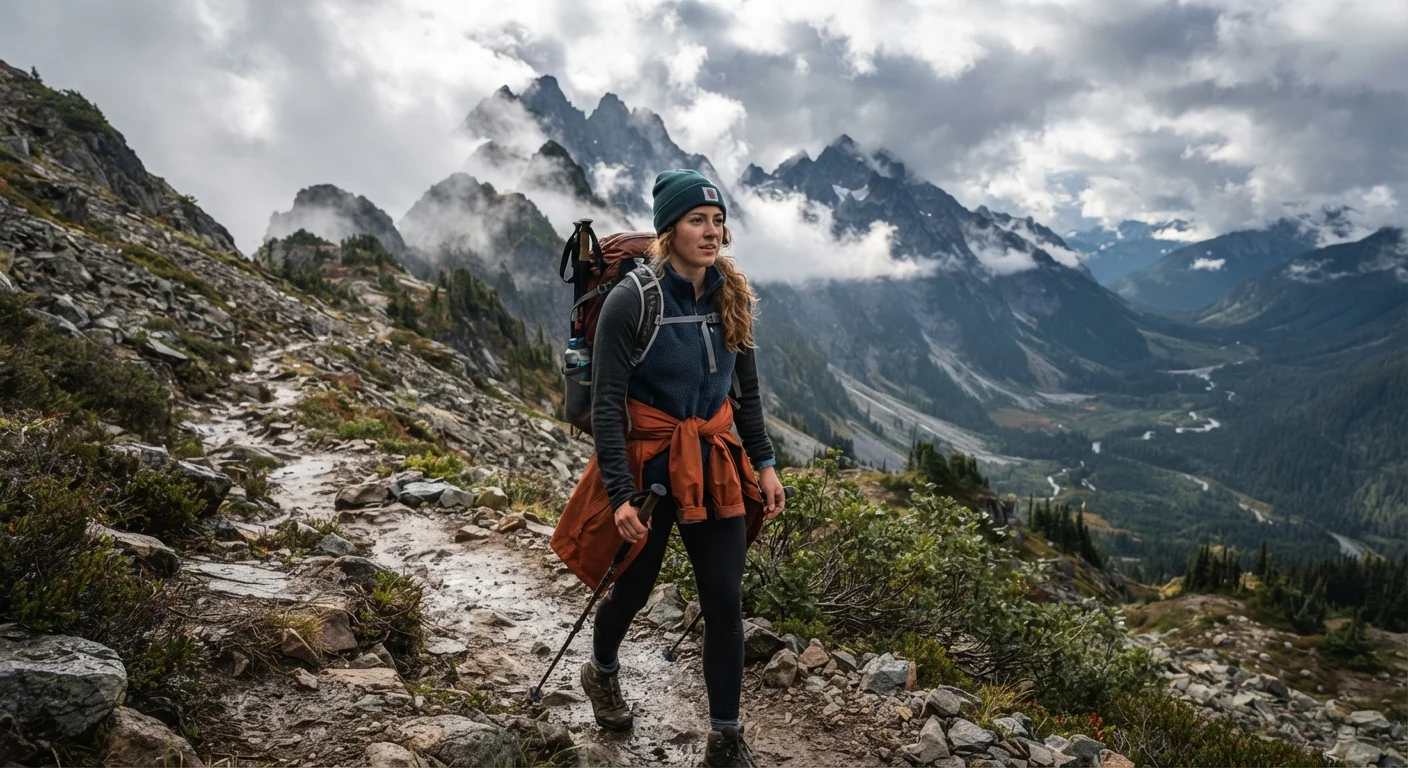
Why Layering Matters More Than Any Single Jacket
No single garment can handle the full range of conditions an outdoor enthusiast faces on a typical outing. A trail that starts in calm morning air may become windy and wet by midday, then cold as the sun drops. The layering system exists to give you control over your personal climate without carrying an impractical amount of clothing.
Rather than relying on one heavy jacket, layering lets you fine-tune your warmth in real time. Peel off a mid-layer before a demanding climb to avoid soaking your insulation with sweat. Add your shell when a storm rolls in. The approach is used by everyone from casual day hikers to technical alpine climbers because it scales to almost any environment.
Understanding the system also helps you make smarter packing decisions. Our day hike gear checklist walks through broader trail essentials, but clothing choices are often the most consequential decisions you'll make before leaving the trailhead.
25×
Faster heat loss from wet skin vs. dry skin
Widely cited in wilderness medicine and outdoor education curricula to explain why moisture management is central to cold-weather safety.
3 layers
Standard components in the outdoor layering system
The base-mid-outer framework is endorsed by major outdoor education organizations, including the National Outdoor Leadership School (NOLS).
~50%
Warmth lost by wet down insulation
Outdoor gear researchers and educators commonly note that down fill loses roughly half or more of its loft - and insulating value - when saturated with water.
The Base Layer: Moisture Management Against the Skin
The base layer is the garment worn directly against your skin. Its primary job is to wick perspiration away from your body so that moisture doesn't cool you down. This distinction matters enormously in outdoor environments, where wet skin loses heat far faster than dry skin.
The most common materials for base layers are merino wool and synthetic fabrics like polyester. Merino wool is valued for its natural odor resistance, soft texture, and ability to regulate temperature across a wide range. Synthetic options tend to dry faster and are often more durable under heavy use. Both are valid choices depending on your preference and budget.
What to avoid: Cotton. Often called "death fabric" in mountaineering culture, cotton holds moisture against the skin, dries extremely slowly, and loses its ability to insulate when wet. It's fine for a casual walk in warm, dry weather - but on any demanding hike where you'll sweat or encounter rain, it's a liability.
Base layers come in lightweight, midweight, and heavyweight options to match the season and activity level. A light synthetic top suits warm-weather hiking; a heavyweight merino base is appropriate for cold, low-output conditions like winter camping.
The Mid-Layer: Trapping Heat When You Need It
The mid-layer's role is insulation - trapping warm air near your body to prevent heat loss. This is the layer you're most likely to add and remove throughout the day as exertion and ambient temperature fluctuate.
Fleece is the most common mid-layer material. It insulates effectively even when slightly damp, dries reasonably quickly, and comes in a range of thicknesses. Down insulation offers an exceptional warmth-to-weight ratio and compresses small for easy packing, but loses much of its insulating value when wet. Synthetic insulation fills a middle ground - less compressible than down, but it maintains warmth even in damp conditions, making it a practical choice in environments where precipitation is likely.
Keep Your Mid-Layer Accessible
Store your mid-layer at the top of your pack or clipped to the outside so you can reach it without unpacking everything at a rest stop. Quick access makes it far more likely you'll actually use it before you get cold, rather than skipping the stop to stay moving - a habit that leads to chilling.
The best mid-layer for you depends on your typical conditions. A fleece pullover works well for most three-season hiking. A packable down hooded jacket makes sense for high-altitude or winter travel where weight and warmth are both priorities.
The Outer Shell: Your Defense Against Wind and Precipitation
The outer shell doesn't usually provide much warmth on its own - it's designed to block wind and repel rain or snow, protecting the insulating layers beneath it. A good shell keeps your mid-layer dry and functioning, which is where the real warmth comes from.
Shells range from lightweight wind jackets to fully waterproof hard shells with sealed seams. For most day hikers, a packable waterproof-breathable jacket strikes the right balance: it sheds rain effectively while allowing some vapor to escape so you don't overheat as much during active movement. Look for jackets with underarm zips (pit zips) or venting options if you run warm.
Understanding how layering interacts with cold-weather risks is worth studying further. The guide to staying safe in cold-weather outdoor activities covers how conditions like hypothermia and frostbite develop - and how proper clothing choices fit into a broader safety strategy.
Putting the System Into Practice
Knowing the layers conceptually is only half the equation. Using them effectively on the trail means developing the habit of proactive adjustment rather than reactive discomfort.
- Before a climb: Remove your mid-layer to avoid sweating through your insulation. A damp down jacket loses much of its warmth.
- At rest stops: Add your mid-layer quickly after stopping, even briefly, to prevent chilling. The body cools fast when exertion stops.
- In rain: Put your shell on before you're wet - not after. Once moisture penetrates your insulation, warming back up takes much longer.
- In wind: Even a light wind shell dramatically reduces heat loss, especially at speed or above the treeline.
The layering system applies just as much to backpacking trips as it does to shorter outings. If you're weighing the differences between day hikes and overnight trips, our overview of day hiking vs. backpacking can help you understand how gear needs shift when you add a night outdoors. And before any outing, the pre-trip checklist for day hikers can help ensure your clothing choices match the day's forecast and terrain.
A hiker sets out on a cool autumn morning in the Appalachians wearing a merino base layer and a fleece mid-layer. As the trail steepens, she unzips the fleece and eventually stuffs it in her pack.
A climber packs a lightweight synthetic insulated jacket for a summer alpine route, even though temperatures at the base are warm.
Two hikers head out in spring, one wearing a cotton hoodie and one wearing a polyester base layer under a fleece. They're caught in an unexpected rain shower for 30 minutes.
A snowshoer starts her outing in a heavyweight base layer and a puffy jacket, then stops to strip down to just the base layer during a vigorous uphill section.