
Why a Pre-Trip Checklist Actually Matters
Most day hikes go smoothly - but the ones that don't often involve something straightforward that was overlooked before leaving the house. A forgotten water bottle, an unchecked forecast, or no one knowing where you went can turn a manageable situation into a serious one. A short pre-trip routine closes those gaps.
This checklist is designed for day hikers of all experience levels. Whether you're walking a well-marked state park trail or tackling a longer ridge route, the preparation principles are the same. If you're newer to outdoor activities, our introduction to outdoor hobbies for adults is a helpful starting point before working through these steps.
Research & Planning (Night Before)
Communication & Safety Plan
Gear & Pack Check
Clothing & Footwear
Essential Tools to Have Ready
Having the right tools on hand makes running through this checklist efficient. You don't need expensive gear to hike safely - but a few key items are genuinely non-negotiable.
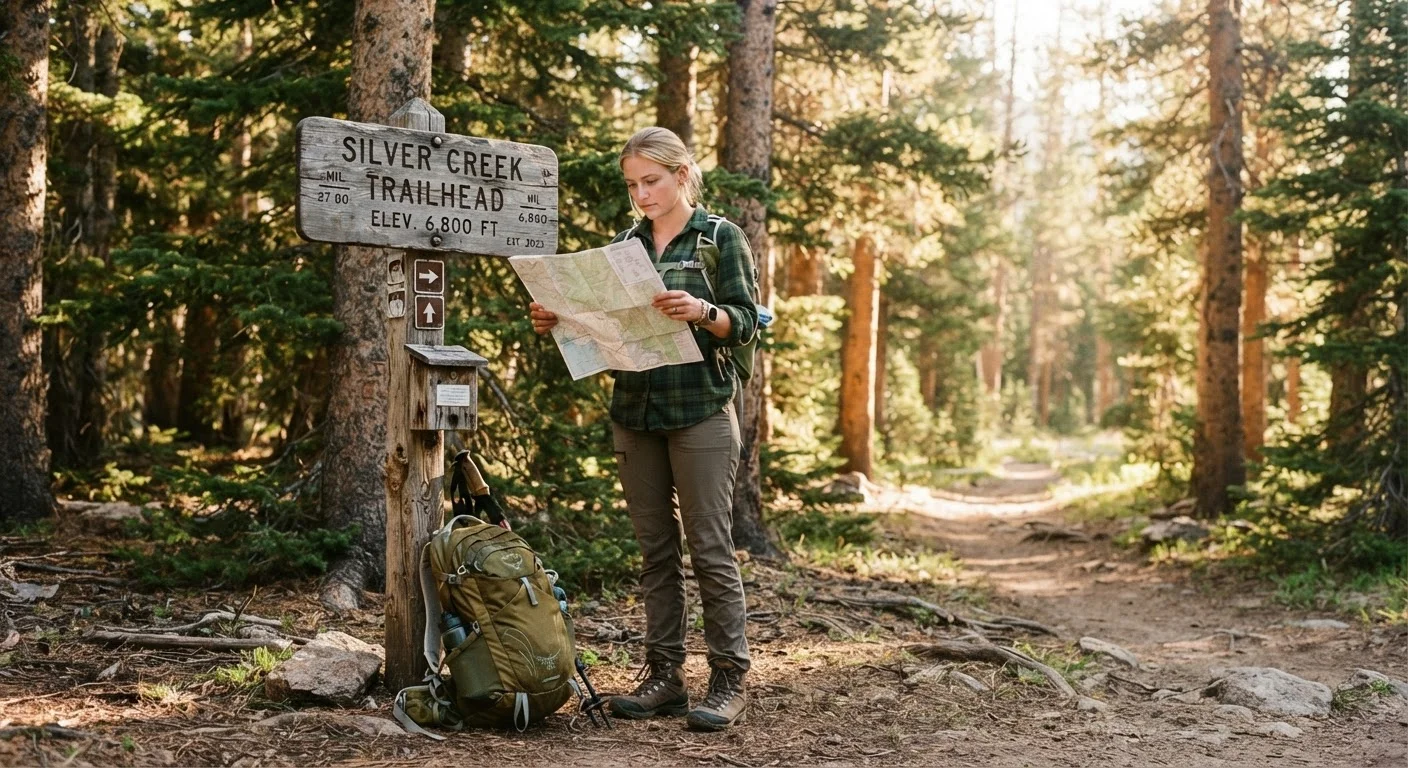
Topographic Map (paper or offline digital)
Provides reliable navigation when cell service fails - essential for any trail beyond a well-marked loop.
Compass
Used with a topo map to confirm direction of travel; does not require batteries or a signal.
Headlamp
Provides hands-free light if your return runs later than expected - standard safety kit for all day hikers.
Water Filter or Purification Tablets
Allows safe drinking from natural water sources if you run low on carried water on longer routes.
Portable Battery Pack
Keeps your phone charged for navigation, emergency calls, or communication when away from power all day.
Personal Locator Beacon (PLB) or Satellite Communicator
Sends an SOS signal in areas with no cell coverage - recommended for remote or solo hikes.
For a deeper look at what belongs in your pack on the trail itself, see our trail-ready packing checklist, which covers gear selection in more detail.
Common Pre-Trip Mistakes to Avoid
Even experienced hikers occasionally skip steps they think they've internalized - and that's exactly when problems arise. A few patterns come up repeatedly.
Don't Rely on Cell Service for Navigation
Many popular trails pass through areas with little or no cellular coverage, and this can catch hikers off guard even near populated areas. Before you leave home, download your route to an offline mapping app or carry a paper map. A phone with a dead battery or no signal is not a navigation tool - it's extra weight.
Turnaround Times Are Not Suggestions
Setting a turnaround time and sticking to it - regardless of how close the summit or destination feels - is a habit that prevents most trail emergencies involving darkness or exhaustion. The trail will be there another day; committing to your turnaround protects you and anyone who might need to search for you.
Underestimating weather windows is one of the most common errors. Mountain and forest weather can shift dramatically within a few hours. Checking a forecast the morning of your hike is better than not checking at all, but doing it the evening before gives you time to genuinely reconsider your destination or timing if conditions look unfavorable. The same principle applies to cold-weather hikes - our guide on staying safe during cold-weather outdoor activities explains how temperature and wind interact in ways that can catch hikers off guard.
Skipping the trip communication step is another pattern that search-and-rescue professionals frequently cite. Telling a contact your trailhead, planned route, and a specific return window costs almost nothing in time. If you're planning a solo outing, our guide to planning a safe solo hike goes deeper on communication protocols and in-the-moment decision-making.
Finally, hikers sometimes treat clothing as an afterthought. Understanding how the layering system works before you pack will help you dress for actual trail conditions rather than just the temperature at the trailhead.