Where They Overlap - and Where They Diverge
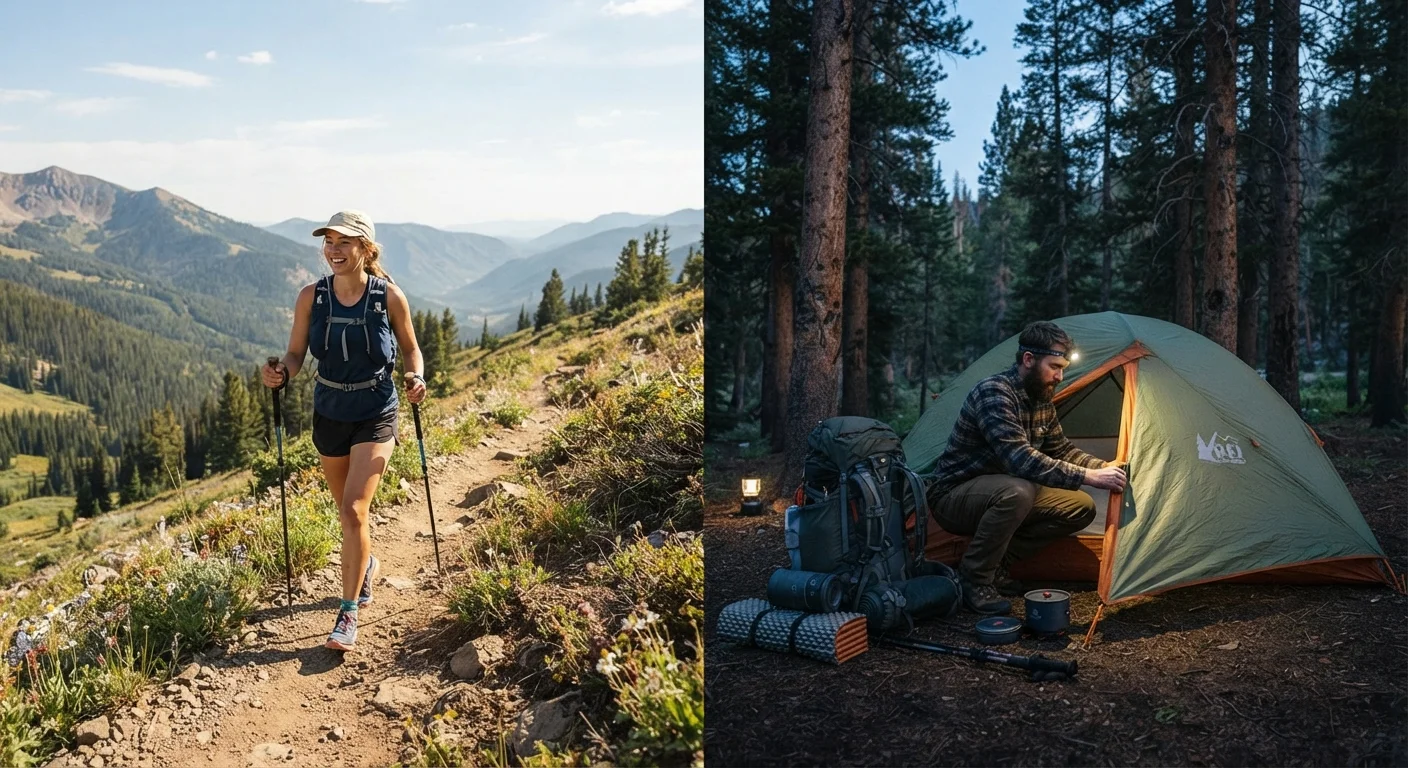
Day hiking and backpacking share a starting point: a pair of trail-ready shoes, a desire to be outside, and a trailhead sign. But within the first few miles, the two activities pull sharply apart. The core difference isn't just the pack weight - it's everything that weight implies.
A day hiker plans to return to a car or building by nightfall. That boundary shapes every decision: how far to go, how much water to carry, and what counts as an emergency. A backpacker, by contrast, must carry shelter, sleep systems, food for multiple days, and a strategy for managing the unknown after dark. The skills, physical demands, and risk profiles are genuinely different, not just variations on the same theme.
See our pre-trip checklist for day hikers for a solid overview of what's needed before any trail outing.
| Criterion | Day Hiking | Backpacking |
|---|---|---|
| Typical pack weight | 5-15 lbs | 15-45 lbs |
| Shelter required | Emergency only | Full tent or bivy system |
| Permit complexity | Low (some day-use areas need reservations) | High (wilderness permits often required) |
| Water sourcing | Carry from home or trailhead | Filter or treat backcountry sources |
| Navigation demands | Moderate | High (multi-day, after dark) |
| Gear investment | Low to moderate | Moderate to high |
| Risk exposure | Limited (return by dark) | Extended (weather, wildlife, fatigue) |
| Fitness baseline needed | General health and stamina | Endurance under load, multi-day |
Gear: What Gets Added When You Stay Overnight
Day hiking gear is intentionally minimal. The widely used "Ten Essentials" framework - navigation, sun protection, insulation, illumination, first-aid supplies, fire-starting tools, repair items, nutrition, hydration, and an emergency shelter - fits into a pack weighing under 15 pounds for most trips. That day hike gear checklist covers the fundamentals without demanding much financial investment or hauling effort.
Backpacking layers on top of those essentials with a full shelter system (tent, sleeping bag or quilt, sleeping pad), multi-day food and a cooking setup, water filtration capable of treating backcountry sources, and clothing systems designed to handle temperature swings from afternoon heat to overnight cold. Loaded backpacks commonly run between 25 and 45 pounds for multi-night trips, though ultralight approaches can push that closer to 15-20 pounds for experienced hikers who've refined their kit over time.
The weight difference is consequential. More weight increases fatigue, alters gait, raises the likelihood of knee and ankle strain, and demands more careful trip pacing.
57M+
Americans who hiked at least once in 2023
According to the Outdoor Industry Association's annual participation report, hiking is consistently one of the most popular outdoor activities in the U.S.
~25 lbs
Average loaded backpack weight for beginners
Outdoor educators commonly cite 25-35 lbs as a typical starting point for first-time backpackers before gear optimization.
10 Essentials
Core items recommended for any hike
The Ten Essentials framework, developed by The Mountaineers, has been the standard safety benchmark for day hikers and backpackers alike for decades.
Planning, Permits, and Logistics
Most day hikes can be arranged with relatively short notice. Trailhead parking, trail conditions, and a weather check are typically the core planning tasks. Some popular day-use areas do require timed-entry reservations, but the logistics are generally simple.
Backpacking introduces a more complex planning layer. Many backcountry areas in the U.S. require wilderness permits that must be secured weeks or months in advance, particularly in high-demand locations like national parks and designated wilderness areas. Campsites may be designated rather than flexible, requiring GPS-level route planning to match distances with available stops. Leave No Trace principles - including waste management, campfire rules, and food storage (often bear canisters in certain areas) - must be understood and practiced.
Navigation demands are also higher. Day hikers who get off-trail can often retrace steps before sunset. A backpacker navigating unfamiliar terrain after dark, in deteriorating weather, or with a group spread along a ridgeline faces a meaningfully different situation. Solo hikers face additional considerations around communication and decision-making that apply even more acutely overnight.
A Note on Wilderness Permits
Permit systems vary significantly by land management agency and location. National Park Service backcountry permits, U.S. Forest Service wilderness quotas, and state park overnight rules each operate on different timelines and application processes. Before planning any backpacking trip, check directly with the managing agency for the specific area you intend to visit. Permit availability - especially for high-demand destinations - can book out months in advance.
Risk, Fitness, and the Learning Curve
Neither activity is inherently dangerous, but the risk profile of backpacking is broader. Hypothermia becomes a real concern when temperatures drop overnight and a hiker is wet or underprepared. Water sources must be filtered or treated to prevent illness. Blisters and joint fatigue compound over multiple days rather than resolving at a trailhead parking lot. Food and waste management in areas with bears or other wildlife requires learned technique, not just common sense.
Fitness expectations shift accordingly. Day hiking can be approached across a wide range of fitness levels by adjusting distance and elevation gain. Backpacking demands baseline endurance - the ability to sustain effort under load across consecutive days without recovery time in between. Building that base through regular day hiking is the path most experienced backpackers recommend before attempting a first overnight trip.
For a broader look at how camping experience translates to outdoor success, see why first-time campers struggle and what experienced ones do differently. The overlap with backpacking preparation is significant. Those interested in how different outdoor formats compare can also explore a broader comparison of camping styles.