The Gap Between Expectation and Reality
Camping looks deceptively simple from the outside - a tent, a fire, some fresh air. But the leap from imagining a campout to actually executing one smoothly is larger than most people anticipate. First-time campers frequently find themselves cold, disorganized, or exhausted by logistics that experienced campers handle almost automatically.
The good news is that the habits separating beginners from confident outdoor enthusiasts aren't mysterious. They're mostly the result of preparation, realistic expectations, and a willingness to practice small skills before relying on them in the field. If you're just getting started with outdoor pursuits, our introduction to outdoor hobbies is a useful starting point before your first overnight trip.
Weather Can Change Fast Outdoors
Temperatures at elevation or in open terrain can drop 20-30°F between afternoon and midnight, even in summer. Before any camping trip, check a location-specific forecast - not just a general regional one - and pack layering options regardless of how sunny the forecast looks. Hypothermia is a genuine risk, not just a dramatic worst-case scenario.
The Most Common First-Timer Mistakes
The mistakes below aren't signs of carelessness - they're patterns that show up repeatedly among well-intentioned beginners. Understanding why they happen makes them much easier to prevent.
Ignoring or underestimating weather and temperature swings.
Why it happens: First-timers often check a city forecast rather than a site-specific one, and assume daytime warmth will persist through the night.
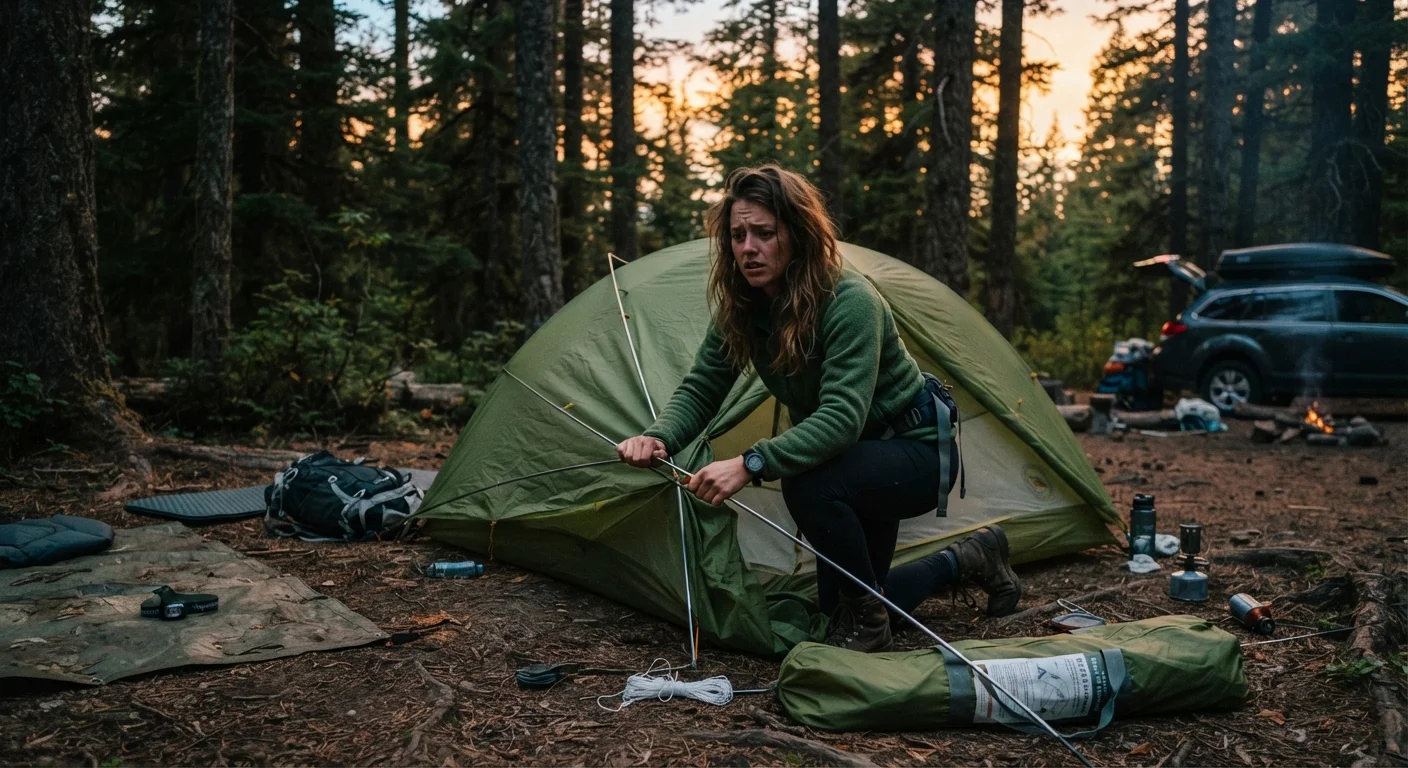
Setting up a tent for the first time at the campsite, in the dark.
Why it happens: Gear gets purchased close to the trip date, and it feels unnecessary to test something that comes with instructions.
Overpacking comfort items while forgetting functional essentials.
Why it happens: Without experience, it's hard to distinguish what feels necessary from what actually is. First-timers often pack duplicate clothing but leave out a headlamp, first-aid kit, or fire starter.
Arriving at the campsite too late to set up in daylight.
Why it happens: Drive times get underestimated, rest stops add up, and check-in windows aren't always factored in.
Choosing a campsite or camping style that doesn't match skill level.
Why it happens: Enthusiasm outpaces experience. A beginner might book a remote backcountry site after watching inspiring outdoor content, without building foundational skills first.
Having no plan for water - either carrying too little or relying on untreated sources.
Why it happens: Hydration needs increase significantly with physical activity outdoors, and many beginners aren't aware that natural water sources require treatment before drinking.
40M+
Americans who camp each year
According to the Outdoor Foundation's annual Outdoor Participation Report, tens of millions of Americans camp annually, making it one of the most widely practiced outdoor activities in the country.
~50%
First-timers who report feeling underprepared
Surveys by outdoor participation researchers consistently find that roughly half of first-time campers say they wished they had prepared more before their initial trip.
What Experienced Campers Actually Do Differently
Veterans don't necessarily carry fancier gear or know more survival theory. What they do consistently is prepare in small, deliberate ways that compress uncertainty on the actual trip.
- They test everything at home. Gear that's been tried once in a low-stakes environment almost never surprises you in the field.
- They keep meals simple and proven. Elaborate camp cooking recipes fail when a stove part is missing or rain complicates fire-building. Experienced campers rely on a short list of dependable meals rather than ambitious new ones.
- They build in buffer time. Campsite setup, water collection, and cooking all take longer outdoors than expected. Experienced campers plan conservatively.
- They know their campsite before they arrive. Reading reviews, checking park websites, and understanding the terrain prevents most location-based surprises.
If you're considering pushing beyond a single overnight to longer adventures, our comparison of day hiking vs. backpacking outlines what changes when you add more nights and more miles. And if solo camping is appealing, it's worth reading a balanced look at solo camping before heading out alone.