What Solo Camping Actually Involves
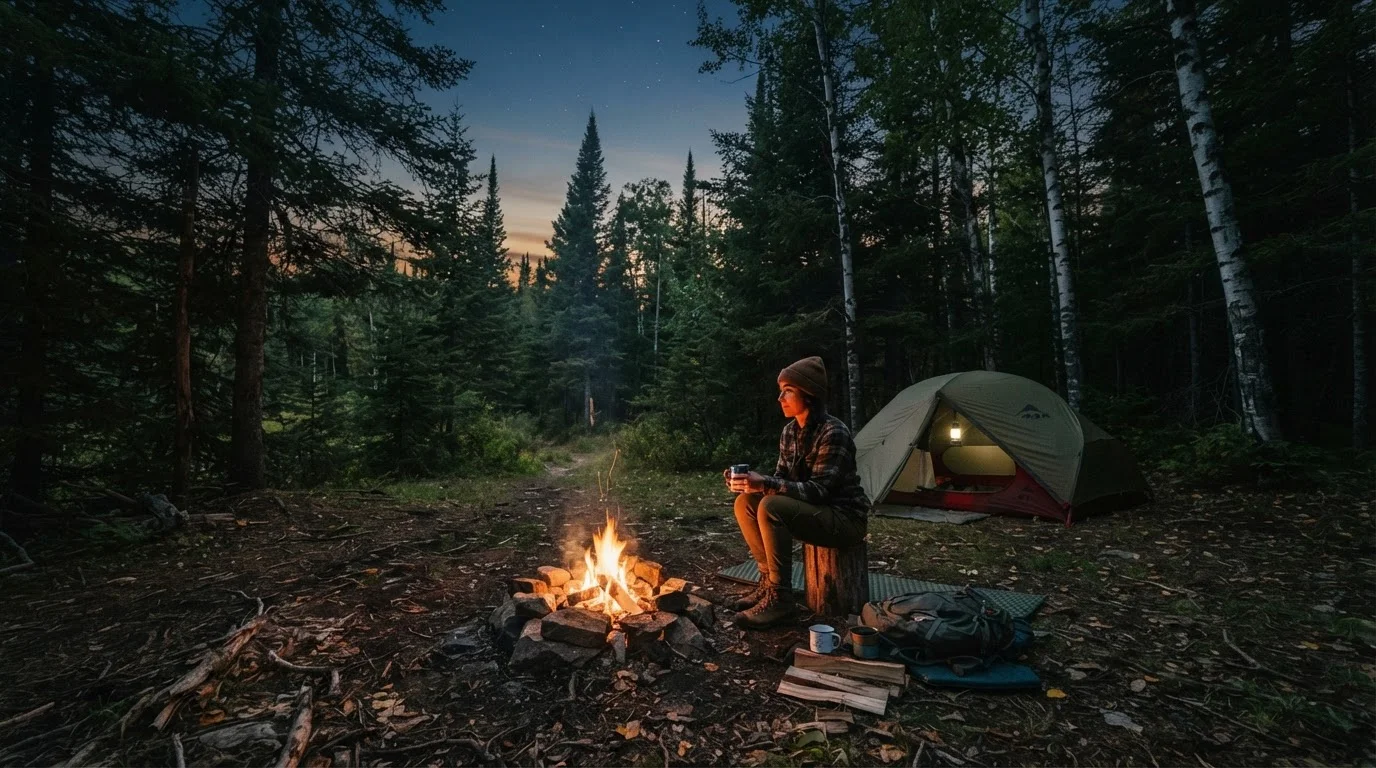
Solo camping means heading outdoors - whether to a developed campground or a remote backcountry site - with no companions. Every decision, from choosing a campsite to managing a campfire, falls to you alone. That's both the appeal and the challenge.
It's worth distinguishing solo camping from simply camping with fewer people. One companion changes the dynamic significantly. True solo camping creates a fundamentally different psychological and logistical experience, closer in some ways to solo hiking than to a quiet group trip.
People pursue it for a range of reasons: mental reset, skill-building, flexibility, or just the desire to experience nature without the social layer that group outings inevitably carry. Understanding what you're signing up for - practically and emotionally - is the most useful starting point.
Solo vs. Group: A Different Kind of Experience
Solo camping isn't simply a stripped-down version of group camping - it's a qualitatively different activity. The social dynamics, decision-making process, and emotional texture of a solo trip differ enough that prior group camping experience, while helpful, doesn't fully prepare you for it. If you're considering the transition, a solo overnight hike can be a useful lower-stakes preview before committing to a multi-day solo camping trip.
The Real Advantages
Solo camping offers a set of benefits that are difficult to replicate in group settings.
Complete freedom over schedule and decisions
No group coordination means you can adapt your plans in real time without compromise. This autonomy appeals to those who find group decision-making exhausting.
Accelerated skill development
Handling every task yourself - navigation, camp setup, cooking, problem-solving - builds practical outdoor competence faster than shared responsibility allows.
Deeper solitude and mental restoration
Time alone in natural settings, free from social obligations, can support stress reduction and mental clarity for those who respond well to extended quiet time.
Flexible pacing with no social pressure
You can hike faster or slower, spend an afternoon reading at camp, or change your route entirely without affecting anyone else's experience.
Stronger sense of personal accomplishment
Successfully managing a solo trip - especially in challenging conditions - tends to produce a measurable confidence boost that persists beyond the trip itself.
The most commonly cited advantage is freedom. When you're alone, your schedule is entirely your own. You can wake up before dawn or sleep past sunrise, take a long detour, or cut a trip short without negotiating with anyone. That flexibility changes how you experience the outdoors - decisions feel more instinctive and less social.
There's also a genuine skill-building dimension. Without others to share tasks or troubleshoot problems, you develop competence faster. Setting up camp, reading weather changes, navigating, and managing your food supply all become things you handle firsthand. Many solo campers describe a measurable boost in outdoor confidence after even a single trip.
Solitude itself has documented psychological benefits. Time alone in natural settings is associated with reduced stress and improved mental clarity, though individual results vary considerably. For those who find group dynamics draining, solo camping can serve as a meaningful form of restoration.
The Honest Drawbacks
Solo camping also carries real tradeoffs that deserve straightforward acknowledgment.
Higher safety risk with no backup
Injuries, illness, or navigation errors that a group could collectively manage become significantly more serious when you're the only person present. Preparation and communication planning are non-negotiable.
Full gear weight falls on one person
Shelter, cooking equipment, and safety gear can't be shared. Solo campers often need lighter - and more expensive - equipment to keep pack weight reasonable on hiking trips.
Potential for unexpected loneliness
Extended solitude affects people differently, and some discover mid-trip that isolation is more uncomfortable than anticipated. This is worth considering honestly before committing to a remote solo outing.
No one to assist with campsite tasks
Setting up a large tent, managing a campfire in wind, or carrying a canoe to water - tasks that are straightforward with two people - require more effort and sometimes different techniques alone.
Perception of risk can deter some locations
Some campers, particularly women, report feeling less comfortable in certain campgrounds or trail corridors when alone. Campsite selection and situational awareness require additional thought.
Safety is the most significant concern. In a group, a twisted ankle or sudden illness is manageable - someone can go for help while others stay. Alone, an injury in a remote location becomes a much more serious situation. There's no buffer for emergencies, which means preparation has to be more thorough. Communication planning and route preparation that might feel optional in a group become essential when you're on your own.
Gear weight and cost also land on one person. Shelter, cooking equipment, navigation tools, and safety supplies can't be distributed across a group. Solo campers often need to invest in lighter - and frequently more expensive - gear to keep pack weight manageable on any trip involving hiking.
Loneliness is worth acknowledging honestly. Some people find extended solitude energizing; others discover, sometimes mid-trip, that they find it uncomfortable or isolating. There's no reliable way to know which category you fall into until you've tried it.
Things Worth Considering Before You Go
A few practical considerations apply specifically to solo camping that don't come up as urgently in group contexts.
Tell someone your plan. Leave a detailed itinerary - including your planned campsite, route, and expected return time - with a trusted contact before departing. This is standard safety practice for any solo outdoor activity.
Start with established campgrounds. If you haven't camped alone before, a developed campground with other campers nearby is a sensible first step. It reduces the stakes while you get a feel for the solo experience. Moving into backcountry settings makes more sense once you've confirmed the experience suits you. See our guide to common first-time camping mistakes for habits worth building early.
Know your water situation. Solo campers need to manage their own water supply with no backup. Understanding backcountry water purification methods before you go is practical, not overcautious.
Match the trip style to your experience level. Car camping, backpacking, and more remote options each carry different demands. Comparing camping styles before committing to a specific format helps ensure your solo debut isn't also your most demanding outing.
~1 in 3
Campers who have tried solo camping
Outdoor recreation surveys consistently suggest a meaningful minority of regular campers have completed at least one solo overnight trip, though methodologies vary across studies.
10-20%
Typical solo gear weight reduction target
Outdoor gear guides commonly recommend solo backpackers target a base pack weight reduction of this range compared to group camping, given the inability to share shelter and cooking gear.