
Understanding Water Types
Where you paddle matters as much as how you paddle. Kayakers broadly classify water into two categories: flatwater and moving water, each requiring different skills and equipment.
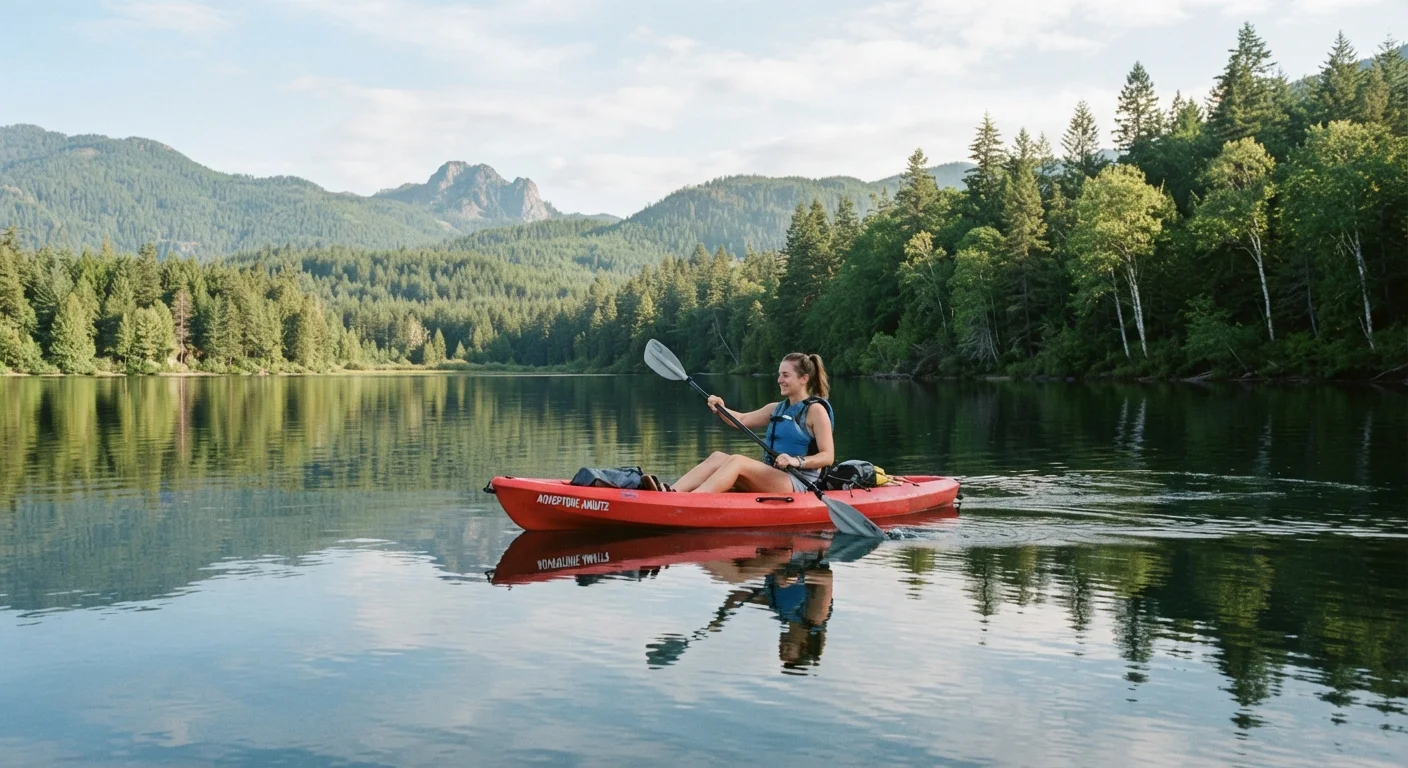
Flatwater includes lakes, ponds, bays, and slow-moving rivers with no significant current. It's the recommended starting environment for beginners because conditions are predictable, hazards are minimal, and you can practice techniques without being pushed off course.
Moving water ranges from gentle river currents to whitewater rapids classified on a scale from Class I (easy, minimal waves) to Class VI (extremely dangerous, typically reserved for experts). Beginners should avoid Class II and above until they've received formal instruction and built solid foundational skills.
If you're just exploring whether paddling suits your lifestyle, this fits naturally alongside other outdoor pursuits - the broader guide to getting started with outdoor hobbies can help you evaluate the bigger picture.
Flatwater
Any calm body of water without significant current or waves, such as a lake, pond, or slow river. Ideal for beginners.
Whitewater
Fast-moving, turbulent river water with rapids and obstacles. Classified by difficulty level; beginners should avoid Class II and above.
Hull
The bottom and sides of a kayak's body. Hull shape determines how stable and maneuverable the boat is.
PFD (Personal Flotation Device)
A wearable device - commonly called a life jacket - that keeps you afloat if you end up in the water. Required on every kayaking outing.
Torso Rotation
The technique of using your core and back muscles to power paddle strokes rather than relying on your arms alone.
Wet Exit
The process of safely exiting a kayak that has capsized underwater. A key safety skill all beginners should learn and practice.
Kayak Hull Shapes Explained
The hull - the underside of the kayak - determines how the boat handles on water. Two key characteristics matter most for beginners: primary stability (how steady the kayak feels when you're sitting still) and secondary stability (how it behaves when tipped to the side).
- Flat hull: Maximum primary stability. Great for calm water. Recreational kayaks typically use this design.
- Rounded hull: Less stable initially but more efficient for long-distance paddling. Common in touring kayaks.
- V-shaped hull: Tracks (travels in a straight line) well but tips more easily. Suited for experienced paddlers.
For most beginners, a wide, flat-hulled recreational kayak - typically 10 to 12 feet long - offers the best combination of stability and ease of use. Kayaking shares some balance dynamics with stand-up paddleboarding; if you're curious about that comparison, see our look at why new paddleboarders struggle with balance.
Paddle Grip and Basic Strokes
Most beginners make the same mistake: they paddle entirely with their arms and wonder why they tire out quickly. Efficient kayaking relies on torso rotation - using the larger muscles of your core and back to drive each stroke.
Holding the Paddle
Grip the shaft with both hands slightly wider than shoulder-width apart. Your knuckles should align with the top edge of the blade. Keep your grip relaxed - a tight grip accelerates hand fatigue.
The Forward Stroke
This is your primary means of propulsion. Plant the blade fully in the water near your feet, rotate your torso, and push the blade through the water to your hip - then lift cleanly. Think of it as unwinding your core rather than pulling with your arm.
The Sweep Stroke
Used for turning, this wide arc stroke starts at the bow (front) and sweeps toward the stern (rear) in a broad curve. A sweep on the right turns the kayak left, and vice versa.
The Draw Stroke
To move sideways - useful when docking or repositioning - reach out to the side, plant the blade parallel to the kayak, and pull the water toward you.
Practice Dry Paddling Before You Launch
Before your first time on the water, sit in a stable kayak on land and practice the forward stroke motion, focusing on torso rotation. This muscle memory exercise helps you internalize proper form without the distraction of balancing on water. Five minutes of dry practice can translate into noticeably better efficiency on your first paddle outing.
Safety Fundamentals Every Beginner Needs
No kayaking session should begin without addressing the following baseline safety practices.
Personal Flotation Device (PFD)
A properly fitted PFD - sometimes called a life jacket - is mandatory equipment. It must be worn, not stowed in the kayak. U.S. Coast Guard regulations require that one Coast Guard-approved PFD be present for each person on board; many states require it to be worn.
Tell Someone Your Plan
Before every outing, tell a trusted contact where you're going, your planned route, and when you expect to return. If something goes wrong, this information helps rescuers find you faster.
Check the Weather
Wind and sudden storms can transform calm water into dangerous conditions rapidly. Check forecasts before launching, and err on the side of staying ashore if conditions look uncertain.
Know What to Do If You Capsize
Capsizing is common, especially for beginners. If you flip, stay calm, keep hold of your paddle, and work your way to the surface near your boat. A technique called the wet exit - releasing your spray skirt if present and exiting the cockpit underwater - should be practiced in a controlled environment before paddling in open water.
Cold Water Is More Dangerous Than It Looks
Water temperatures below 60°F can cause cold shock and rapid loss of muscle control within minutes of immersion - even on a warm day. Always check water temperature, not just air temperature, before kayaking in spring or fall. Dress for immersion in cold-water conditions, and consider a wetsuit or drysuit if water temperatures are low.
Getting on the Water for the First Time
Your first paddling session will go much smoother with a few practical steps. Consider booking a beginner lesson through a local outfitter or paddling club - certified instructors can correct technique errors in real time that would otherwise take months of self-practice to unlearn.
When you're ready to launch, here's a simple checklist:
- Secure your PFD and confirm the fit.
- Check that your paddle is properly assembled and the blades are aligned.
- Enter the kayak from a stable dock or shallow shoreline - keep your weight centered and low.
- Start paddling in a straight line before attempting turns.
- Stay close to shore while you build confidence.
Expect your first session to feel awkward - that's completely normal. Balance and paddle mechanics improve quickly with repetition. Most beginners report feeling significantly more comfortable after just two or three outings.
Kayaking rewards patience and consistency, much like any other skill-based hobby. If you enjoy picking up new pursuits systematically, the same structured approach applies whether you're exploring the outdoors or something entirely different - like the approach outlined in our guide to starting out in creative arts.
American Canoe Association (ACA)
The ACA is the leading paddlesports organization in the U.S., offering certified instruction programs, safety resources, and a directory of local paddling clubs for beginners to find guided outings and lessons.
U.S. Coast Guard Boating Safety
The official federal resource for boating regulations, PFD requirements, and on-water safety guidelines applicable to kayakers and other small-craft paddlers across all U.S. waterways.