
How Orienteering Actually Works
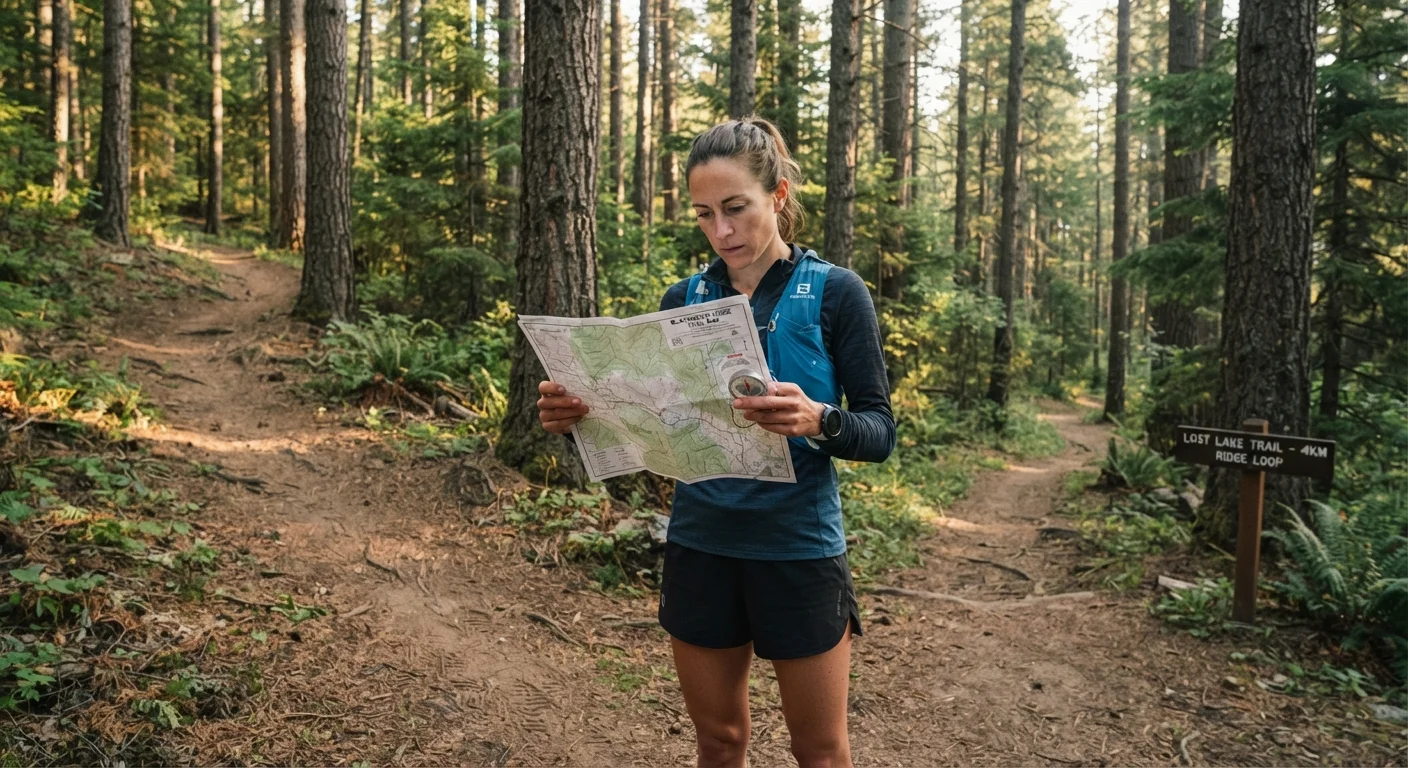
At the start of an orienteering event, each participant receives a detailed map showing the course's control points - physical markers (orange-and-white flags) placed at specific terrain features like a hilltop, boulder, or stream junction. Competitors set off at timed intervals to prevent following other runners, then use their map and compass to locate each control in sequence.
At every control, participants punch a card or tap an electronic chip to prove they visited the correct spot. The winner is whoever completes the full course in the least time - but getting anywhere fast requires sound navigation. A poor route choice that sends you through dense brush or over a hill can cost more time than any sprint could recover.
Courses are tiered by difficulty. Beginner routes use clear trails and simple map symbols, while expert courses traverse complex terrain with subtle features requiring precise compass bearings and contour interpretation. This scalability is one reason orienteering attracts participants ranging from curious newcomers to elite athletes.
70+
Orienteering USA member clubs nationwide
According to Orienteering USA (OUSA), more than 70 affiliated clubs operate across the United States, hosting regular events in parks and natural areas.
1897
Year of the first public orienteering event
The first recorded public orienteering competition was held in Norway in 1897, marking the transition of the activity from military exercise to civilian sport.
77+
Countries with IOF member federations
The International Orienteering Federation reports membership from more than 77 national federations, reflecting the sport's broad international presence.
The History and Global Reach of the Sport
Orienteering originated in Scandinavia in the late 19th century as a military training exercise. Swedish army officers used map-and-compass navigation drills across forested terrain to sharpen field skills. By the early 20th century, it had evolved into a civilian competitive sport, with the first public orienteering event held in Norway in 1897.
The sport spread across Europe throughout the 20th century and eventually reached North America. Orienteering USA was founded in 1971 and has grown to include more than 70 member clubs. Internationally, the sport has a strong following in Scandinavia, Central Europe, and Australia, with the IOF World Orienteering Championships drawing competitors from dozens of countries.
In the United States, orienteering has remained a niche pursuit compared to mainstream outdoor recreation - but its dedicated participant base is enthusiastic, and the sport has a growing youth development pipeline through school and scouting programs. For a broader picture of how Americans engage with recreational activities like this, see our overview of recreational sports participation.
What Makes Orienteering Unique Among Outdoor Sports
Most outdoor sports test either physical ability or tactical thinking. Orienteering tests both simultaneously, and that combination is genuinely unusual. A runner who can't read a map will lose to a slower, sharper navigator. A skilled map-reader who stops to think at every junction will be overtaken by someone who has trained route-choice decisions to feel instinctive.
The terrain itself changes constantly. Unlike a road race with a fixed course, orienteering courses are never repeated in the same location twice, and every event rewards local terrain reading skills - understanding that a green tint on the map means slow going through thick vegetation, or that tightly packed contour lines signal a steep slope best avoided.
Start With a Beginner Course
First-time participants should always choose the shortest, easiest course available - typically labeled 'White' or 'Yellow' in American club events. These courses follow clear paths and use simple map features, letting you build confidence in map reading before tackling open terrain. Don't worry about speed on your first outing; finding all the controls correctly is the real goal.
If you're curious whether orienteering fits your lifestyle, it pairs naturally with other outdoor pursuits. Our guide to getting started with outdoor hobbies offers a practical starting point for adults exploring nature-based recreation for the first time.
How to Get Started in Orienteering
The easiest entry point is attending a local club event. Most orienteering clubs welcome first-timers and offer a beginner-friendly course alongside competitive ones. Event fees are typically modest, and club members usually volunteer to walk newcomers through map symbols and compass basics before the start.
Before attending an event, it's worth spending a few minutes learning the core map symbols - specifically, what the five map colors represent (white for open forest, yellow for open land, green for dense vegetation, blue for water, black for man-made features) and how contour lines indicate elevation change. Many clubs post instructional resources on their websites.
Orienteering fits a wide variety of seasons and regions. Whether you're in the Pacific Northwest forests, the Appalachian hills, or a Midwest state park, terrain suitable for the sport exists nearby. For ideas on outdoor activities suited to your region and time of year, explore our guide to seasonal outdoor activities across the U.S.. You can also browse the broader outdoor activities hub for related pursuits.