The Scale of Recreational Sports in America
American recreational sports participation is enormous in scope. According to the Physical Activity Council's annual surveys, more than 200 million Americans age 6 and older engaged in at least one sport or physical activity in a given year. That figure encompasses a staggering range of activities - from morning jogs in suburban neighborhoods to organized pickleball leagues in retirement communities to pickup basketball on urban courts.
This breadth is one of recreational sport's defining qualities. Unlike professional athletics, which draws a narrow sliver of elite performers, recreational sports are fundamentally democratic. There is no tryout, no draft, and no salary threshold. Participation is open to virtually anyone willing to show up. That accessibility is both what makes recreational sports culturally significant and what makes them difficult to measure cleanly - they happen in backyards, public parks, gyms, and waterways as much as in registered leagues and formal facilities.
For a broader look at how sports participation fits into American leisure culture overall, see how Americans spend their free time.
200M+
Americans participating in sport or physical activity annually
According to the Physical Activity Council's participation reports, the figure covers Americans age 6 and older across structured and unstructured activities.
#1
Most widely practiced recreational activity
Walking for fitness consistently ranks as the top recreational physical activity in U.S. participation surveys, requiring no equipment or facility access.
36M+
Estimated pickleball players in the U.S.
The Sport & Fitness Industry Association has tracked rapid pickleball growth, with the sport drawing players across a wide age range in recent years.
2x
Participation gap by household income
Higher-income Americans participate in recreational sports at roughly double the rate of lower-income Americans, according to Physical Activity Council data.
What Americans Are Actually Playing
The most common recreational activities in the U.S. skew toward individual, low-barrier pursuits. Walking for exercise has long held the top spot in participation surveys - it requires no equipment, no partner, and no facility access. Swimming, cycling, and hiking follow closely, all sharing that same low-entry-point quality.
Team sports remain deeply embedded in American recreational culture, however. Basketball, soccer, softball, and volleyball generate millions of informal and organized participants each year. Adult recreational leagues - the kind run through municipal parks departments, private gyms, and community organizations - have remained a steady institutional backbone for team sport participation among working-age adults. If you're considering joining one, here's an honest look at what adult rec leagues actually involve.
Newer activities have also surged. Pickleball, in particular, has grown at a pace that surprised even recreational sport researchers, drawing in older adults who find its smaller court and lower physical demand more accessible than tennis. Trail running, stand-up paddleboarding, and gravel cycling have similarly expanded their participant bases over the past decade.
Geography shapes the activity mix considerably. Regional variation in outdoor activities means that what's common in the Pacific Northwest - kayaking, mountain biking - looks quite different from what draws crowds in the Sun Belt, where golf, pickleball, and open-water swimming dominate year-round.
Why People Play: Motivations Behind Participation
Understanding why Americans participate in recreational sports matters as much as understanding what they play. The motivations are layered and often intertwined, and they shape everything from which activities people try to how long they stick with them.
Fitness is the most commonly cited reason people give for starting a sport. But research on long-term adherence consistently finds that social factors - having a regular team, a group of friends who show up, a shared schedule - do more to sustain participation than health goals alone. People who join leagues or group activities tend to keep showing up in ways that solo gym-goers often don't.
“People don't stay active because they set a fitness goal. They stay active because they found a community - and the activity is the excuse to show up.”
— Researcher in leisure studies, Academic specialist in recreational behavior and sport participation
Stress relief and mental reset are also significant drivers, particularly among working-age adults. The structured break that a Tuesday night volleyball league or a Saturday morning run club provides is itself a form of value separate from any physical benefit. For a careful look at what the evidence actually says about outdoor activity and health outcomes, see separating proven health benefits from popular claims.
Age changes the motivational calculus. Younger participants often pursue excitement, skill development, and competition. Older adults frequently prioritize social connection, routine, and low-injury-risk engagement. How those preferences shift decade by decade reveals a nuanced picture of sports participation across a lifetime.
Barriers to Participation and Equity Gaps
Recreational sports participation is not evenly distributed across American society. Income, geography, race, and disability status all shape who plays and how often. Lower-income households participate at meaningfully lower rates - a gap driven by cost of equipment, facility access fees, transportation, and time constraints rather than lack of interest.
Access to safe, maintained public green space is particularly significant. Communities with well-funded parks systems see higher rates of informal recreational activity. Areas with fewer public resources - often lower-income urban neighborhoods or rural regions without trail infrastructure - show lower overall participation despite sometimes having strong informal sports cultures.
These patterns are worth keeping in mind when interpreting national participation statistics. Aggregate numbers can obscure wide disparities in who benefits from America's recreational sports infrastructure and who is effectively excluded from it.
Recreational sports also exist in a distinct cultural space from professional athletics and elite amateur competition. Where the world of American sports fandom centers on watching and following, recreational sports are fundamentally about doing - a distinction that carries real significance for communities, public health policy, and urban planning alike.
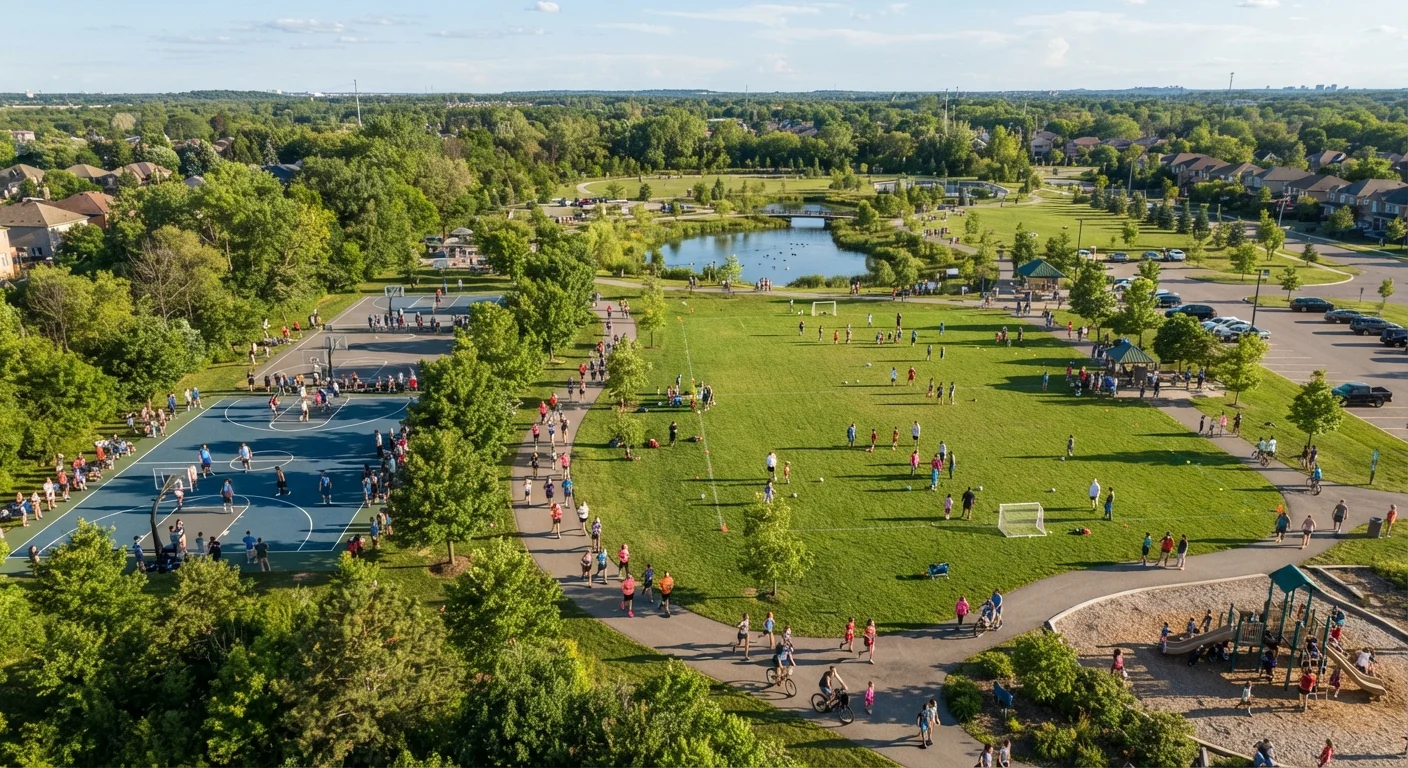
A 42-year-old accountant joins a co-ed adult soccer league through her city's parks department, playing Sunday mornings with teammates she didn't previously know.
A retired couple in Arizona picks up pickleball at a local recreation center and begins playing four mornings a week with a rotating group of neighbors.
A group of coworkers in a mid-size Pacific Northwest city forms an informal weekend hiking group, rotating trails across state and national parks.
A teenager in a low-income urban neighborhood regularly plays pickup basketball at a local public court but has no access to a league or organized team.