What Access Policy Actually Means
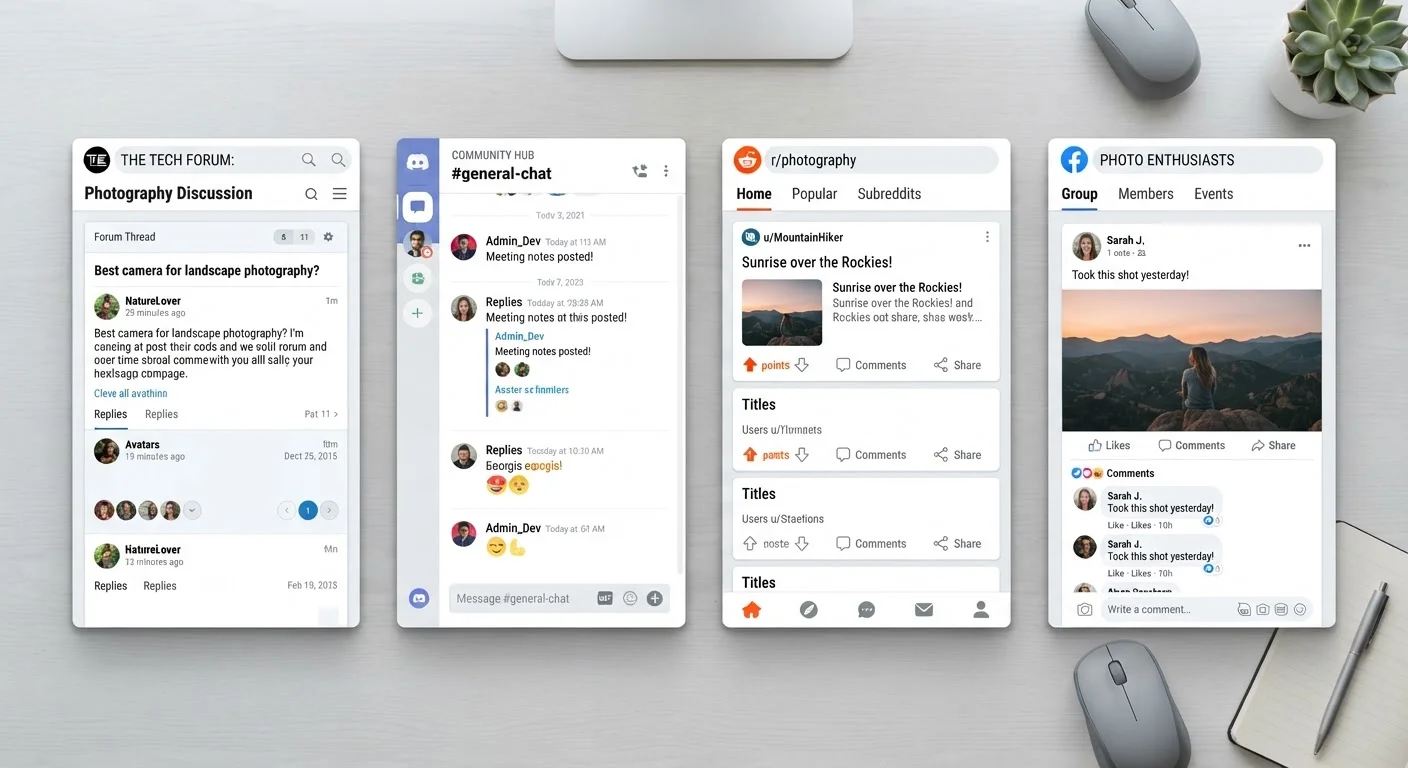
Every online community - whether it lives on Reddit, Facebook, Discord, or a niche forum - has to answer one foundational question: who gets in? The answer to that question is its access policy, and it shapes almost everything that follows.
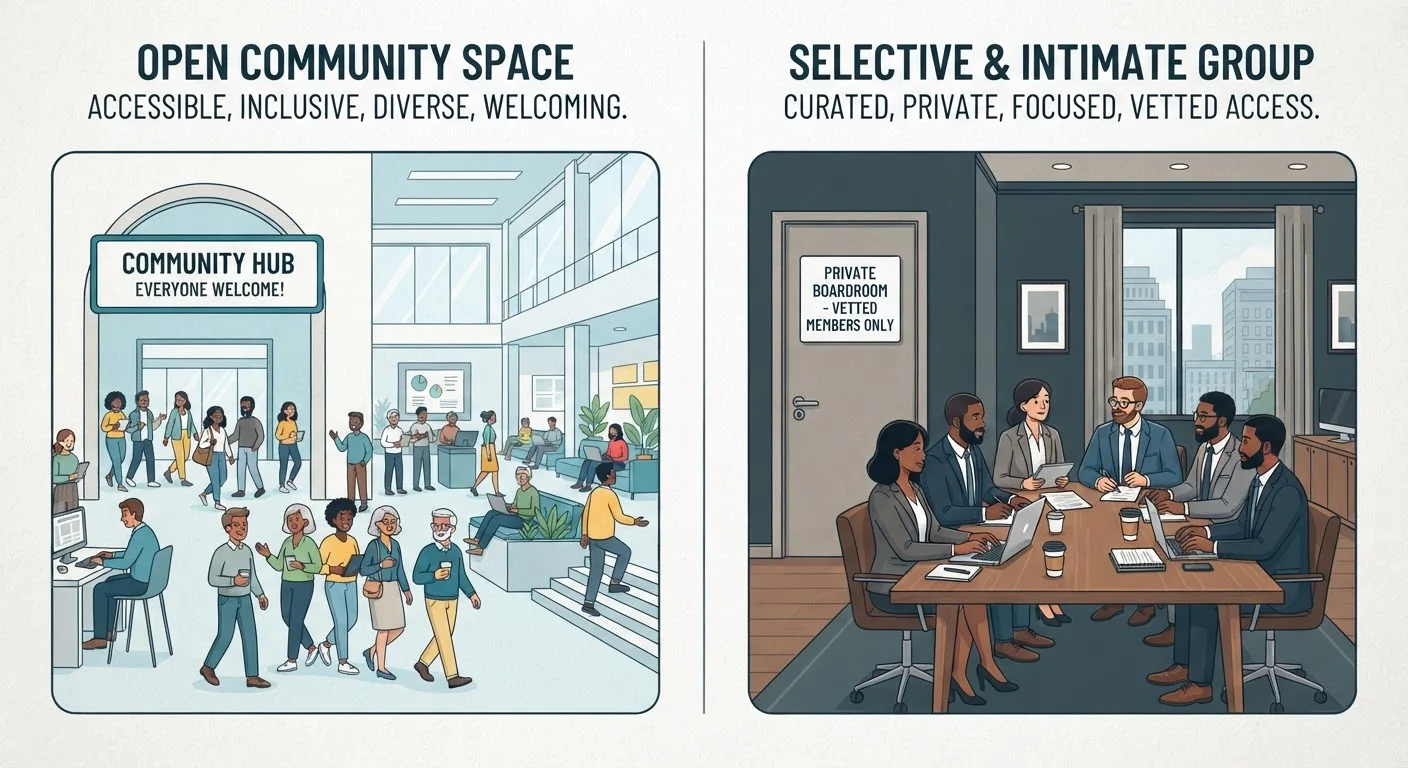
An open community allows anyone to join, browse, or post without prior approval. Think of a public subreddit or a Facebook group set to "Anyone can join." A private group, by contrast, requires some form of vetting - an invitation, an application, moderator approval, or a paid membership - before someone can participate.
These aren't just technical settings. As our guide to open and closed platforms explains, access structures influence who feels welcome, what gets said, and how community norms develop over time. Understanding the trade-offs helps both community builders and everyday members make smarter choices about where to spend their time.
The Case for Open Communities
Open communities have real advantages, especially for topics that benefit from diverse perspectives and high visibility.
Broader reach attracts diverse perspectives
Open communities draw members from a wide range of backgrounds and experience levels, which can lead to richer discussions and more varied problem-solving. This diversity is especially valuable for knowledge-sharing communities.
Easier to discover and grow organically
Public content is indexed by search engines and shareable across platforms, making open communities far more findable. New members can stumble in through a search result or a shared link without any friction.
Lower barrier reduces commitment anxiety
When joining costs nothing and requires no approval, people are more willing to try a community out. This lowers the stakes for both members and organizers early in a community's life.
Transparency builds public credibility
Open communities can demonstrate their value publicly - debates, resources, and expertise are visible to outsiders, which can enhance the reputation of the community and its members.
~2.9B
Monthly active Facebook Groups users globally
Meta has reported that billions of people use Facebook Groups, the majority of which are set to private or closed access - suggesting that even on open platforms, users gravitate toward gated spaces.
10x
Moderation burden increase as open communities scale
Community management practitioners frequently observe that moderation complexity grows disproportionately with membership in open forums, though exact ratios vary by platform and topic.
The downsides are real, though. Open access means anyone can show up - including bad-faith actors, spammers, and trolls. Moderation workload increases sharply as membership grows, and the tone of conversations can drift as the community loses the shared context that smaller groups take for granted. Community norms become harder to maintain when new members arrive constantly without any orientation.
The Case for Private Groups
Private groups sacrifice size for something many members find more valuable: trust.
Entry barrier filters out bad-faith actors
Requiring approval before someone can post significantly reduces spam, harassment, and low-effort contributions. Moderators spend less time on reactive cleanup and more on fostering genuine discussion.
Members speak more candidly in trusted spaces
When people know they're among vetted peers, they're more willing to share personal experiences, ask beginner questions, or take intellectual risks. This candor is difficult to sustain in a fully public forum.
Shared criteria create a sense of belonging
A common application process, interview, or referral requirement signals that members were chosen - which can strengthen collective identity and commitment to community health.
Slower growth often means more sustainable culture
Private communities tend to add members gradually, which gives existing norms time to be absorbed. Sudden membership spikes - common in open communities - can destabilize established culture.
When entry requires approval, members are more likely to share honestly, ask vulnerable questions, and build genuine relationships. Support groups, professional networks, and hobbyist circles that deal in personal or sensitive information often thrive in this format. The barrier to entry also signals commitment - members who went through a process to join tend to participate more meaningfully and stick around longer.
The limitations are equally real. Private groups can develop insularity, where groupthink goes unchallenged because outside voices never enter. They can also be harder to discover, which limits growth and can create echo chambers. And if entry criteria are poorly designed, they may unintentionally screen out valuable voices.
Privacy Isn't the Same as Private Access
A private group restricts who can join, but that doesn't automatically mean your posts are fully private. Screenshots can be shared, platform policies still apply, and administrators can see everything. If your community deals in sensitive personal information, it's worth understanding the platform's actual data practices. Our digital privacy resources can help members think through what they're actually sharing and with whom.
How Access Shapes Participation Over Time
Access policy isn't just a first-impression issue - it compounds over time. Open communities often follow a pattern: rapid early growth, an influx of casual participants, and then a moderation challenge that either gets solved (through clearer rules and active enforcement) or leads to decline. Private groups tend to start slower but can sustain high-quality participation for years, provided they don't become stagnant.
Many communities address this by using layered access - a public-facing space for discovery and broad conversation, with an inner circle or dedicated channel available only to vetted or long-standing members. This hybrid approach tries to capture the benefits of both models. The roles and rules that hold communities together often reflect exactly this kind of tiered thinking.
For members deciding where to invest their time, it helps to ask: do I want reach or depth? Am I here to learn from a wide range of people, or to build real relationships with a smaller group? Healthy participation habits differ between these two environments, and recognizing that difference can save a lot of frustration.