What These Terms Actually Mean
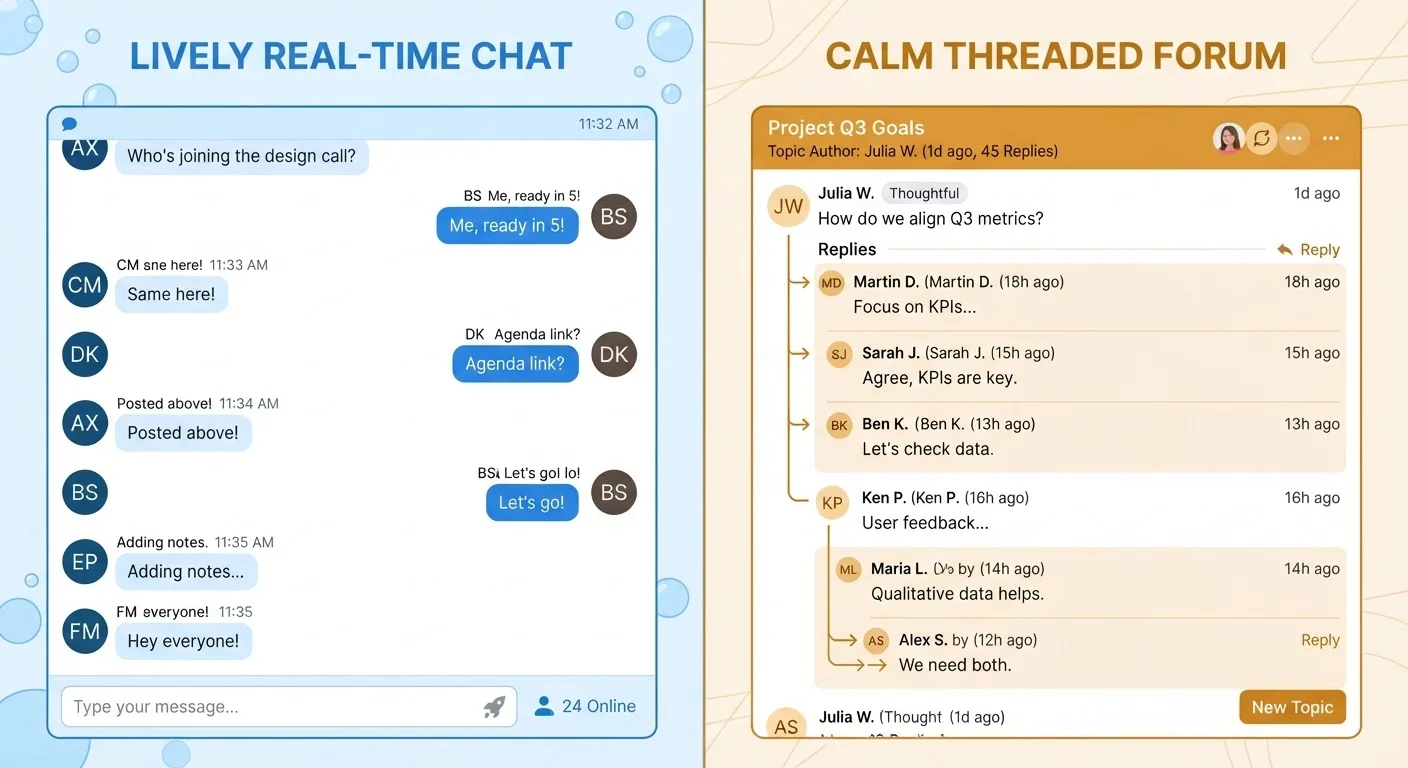
When people talk about participation in online communities, timing matters more than most newcomers expect. Synchronous participation means everyone is present at the same time - messages appear, people respond within seconds, and the conversation flows like a spoken exchange. Asynchronous participation (often shortened to "async") means contributions are made and read at different times - you post a reply tonight, someone in another time zone reads it tomorrow morning and responds then.
These aren't just technical distinctions. They shape how a community feels, what kinds of conversations are possible, and who can realistically take part. If you've ever felt lost trying to follow a fast-moving Discord channel, or wondered why a subreddit thread seemed quieter than expected, you've already experienced the difference firsthand.
To understand how this fits into the bigger picture of online communities, it helps to start with what defines an online community in the first place - not every group chat or forum qualifies.
How Each Style Shapes Community Culture
Synchronous spaces tend to develop a fast, conversational tone. Inside jokes land in the moment. Group reactions - to a live stream, a game match, a breaking news event - create shared memories that bond participants. The downside is that these moments are hard to revisit. If you weren't there, you missed it.
Asynchronous communities, by contrast, build their culture through accumulated content. A forum's character emerges from thousands of threads, pinned guides, and upvoted answers that remain accessible long after they were written. New members can read through a community's history and understand its norms before posting a single word. This also makes async spaces more forgiving - a thoughtful reply written at 2 a.m. reaches the same audience as one posted at noon.
| Criterion | Synchronous | Asynchronous |
|---|---|---|
| Timing | Real-time, live | Delayed, on your schedule |
| Common platforms | Discord, Twitch chat, live Twitter Spaces | Reddit, forums, Facebook Groups, email lists |
| Pace | Fast-moving, ephemeral | Slower, persistent threads |
| Pressure to respond | High - messages scroll past quickly | Low - replies stay visible for days |
| Depth of responses | Usually brief and conversational | Often longer and more detailed |
| Time zone friendliness | Favors shared time zones | Works across any time zone |
| Content lifespan | Messages quickly buried or lost | Threads searchable long after posting |
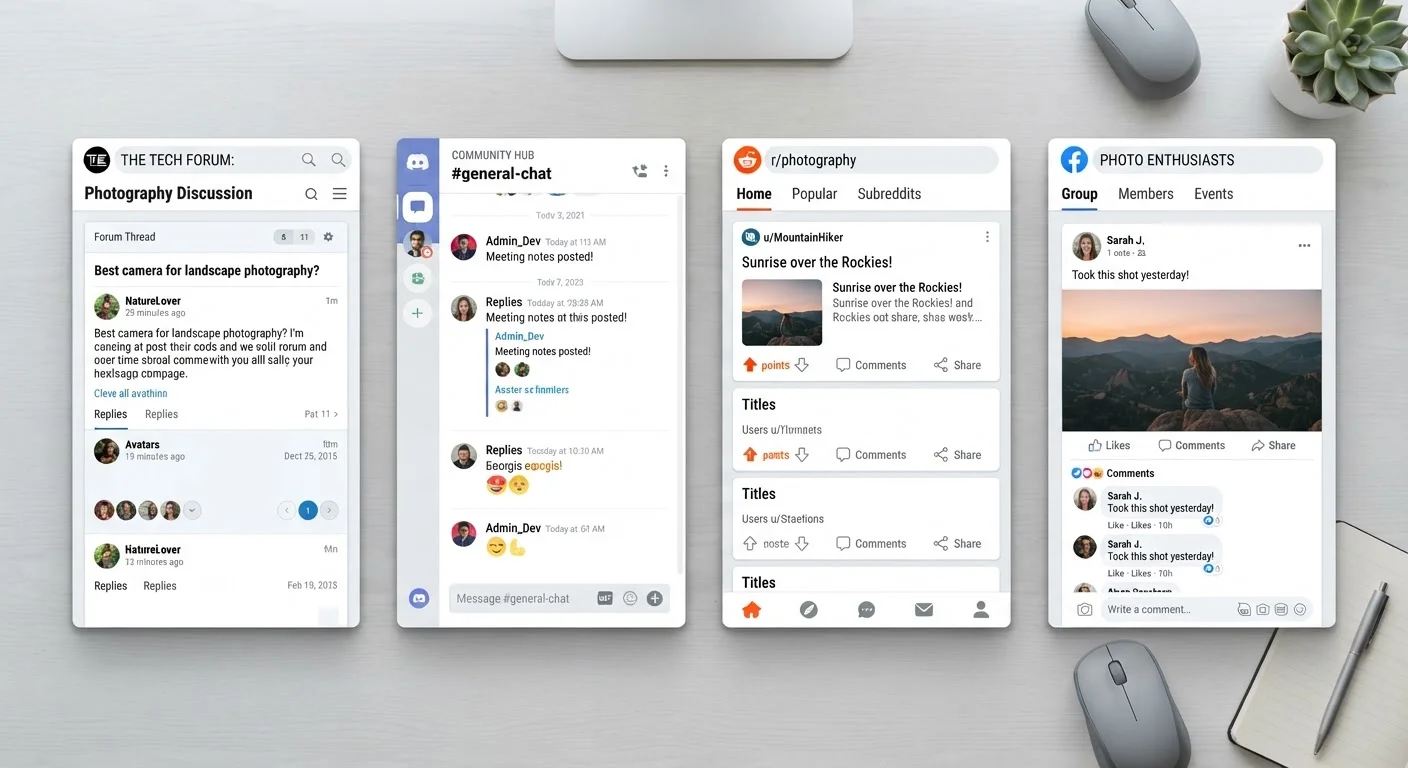
The platform you use is often a signal of which mode dominates. Discord servers, subreddits, and Facebook Groups each lean toward a different participation style, even when individual communities bend those defaults.
Most Communities Use Both Modes
It is rare for an online community to rely entirely on one participation style. A subreddit might host a weekly live chat thread alongside its regular asynchronous posts. A Discord server built around real-time chat often includes slower announcement or resource channels. Understanding both modes helps you navigate whichever blend a community uses.
Choosing What Works for You
Neither mode is universally better. A synchronous community might feel overwhelming if you can only check in sporadically, while an async forum might feel slow if you want immediate feedback. The right fit depends on your schedule, your communication style, and what you're hoping to get out of participation.
~70%
Forum readers who never post
Research on online community behavior consistently finds that the majority of members read without actively contributing - a pattern especially common in asynchronous spaces.
24/7
Hours async communities stay active
Because asynchronous platforms don't require simultaneous presence, global communities can sustain activity around the clock across all time zones.
It's also worth knowing that you don't have to be a high-volume contributor in either format. Lurking - reading without posting - is a legitimate way to participate, and it's especially common in asynchronous communities where content stays available over time.
If you're still building confidence in online spaces, common myths about online participation may be holding you back more than the format itself. And for a fuller picture of how engagement evolves over time, the full arc of online participation covers everything from first post to long-term involvement.