Why Some Hobbies Count as Real Exercise
The conventional image of exercise - a gym, a treadmill, a structured workout plan - leaves out a huge swath of physical activity that happens naturally through leisure. When a hobby demands sustained movement, it can deliver measurable health benefits: improved cardiovascular fitness, stronger muscles, greater flexibility, and better balance. The U.S. Department of Health and Human Services recommends adults get at least 150 minutes of moderate-intensity aerobic activity per week, and many popular pastimes can contribute meaningfully toward that goal.
What makes active hobbies especially effective is motivation. Research in exercise psychology consistently shows that intrinsic motivation - doing something because you find it rewarding - leads to more consistent participation than obligation-driven workouts. In other words, you're more likely to stick with a hobby you love than a fitness routine you endure. For a broader look at how Americans spend their free time, see the Landscape of American Hobbies.
Start With What You Already Enjoy
If you already enjoy being outdoors, hiking or cycling may be natural fits. If you're drawn to music and social settings, dance classes are worth exploring. Matching an active hobby to existing interests dramatically increases the chance you'll keep doing it. You don't have to love exercise - you just have to love the hobby.
Active Hobbies Worth Exploring
Hiking
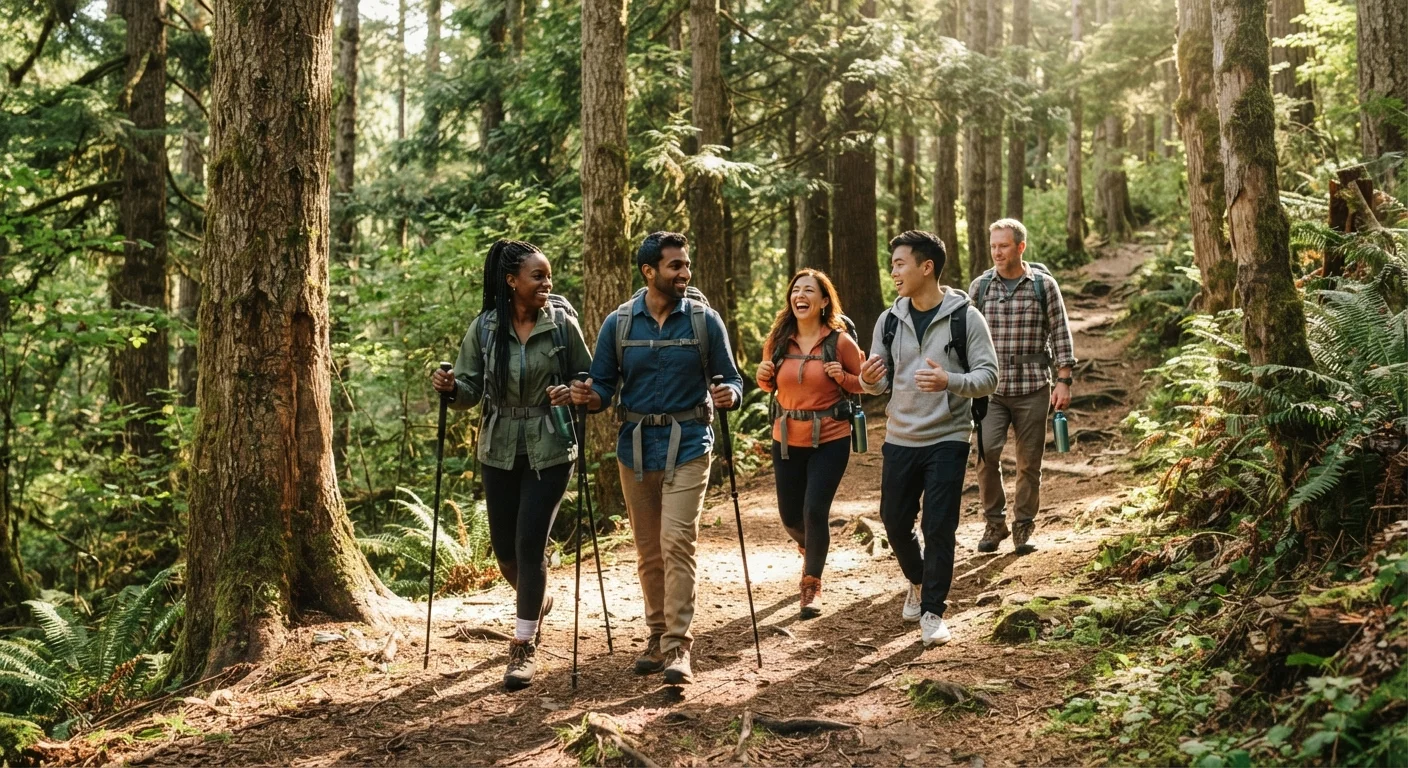
Hiking is one of the most accessible and effective active hobbies available. A moderate two-hour trail walk can burn several hundred calories, strengthen leg and core muscles, and improve cardiovascular endurance - all while offering genuine immersion in nature. Trail difficulty can be scaled from flat, paved paths to steep backcountry routes, making it suitable for nearly any fitness level. It falls squarely within the outdoor activities most Americans can access within a short drive.
A moderate two-hour hike engages cardiovascular fitness, leg strength, and core stability simultaneously.
Dancing
Dance - whether social ballroom, salsa, line dancing, or folk styles - delivers a high-quality cardiovascular workout wrapped in music and social connection. Studies have found that regular social dancing can improve balance, coordination, and aerobic capacity, with some research suggesting benefits for cognitive function as well. Classes, community events, and dance halls lower the barrier to entry considerably, and the social dimension makes it easy to show up consistently.
Regular dancing builds cardiovascular endurance, balance, and coordination while remaining genuinely enjoyable.
Martial Arts
Disciplines such as Brazilian jiu-jitsu, karate, taekwondo, and kickboxing develop strength, flexibility, agility, and aerobic capacity through structured training. Most dojos welcome beginners, and the belt or rank progression system offers a built-in sense of accomplishment that keeps practitioners engaged long-term. Beyond fitness, many practitioners cite improved discipline, focus, and stress management as meaningful side benefits. Martial arts is also one of the more robust recreational sports options for adults seeking structured physical challenge.
Martial arts training builds full-body fitness while offering a structured progression system that sustains long-term motivation.
Cycling
Cycling - whether road riding, mountain biking, or casual neighborhood loops - is a low-impact aerobic activity that's easy on joints while still demanding meaningful effort from the cardiovascular system and lower-body muscles. It's practical as transportation and recreational simultaneously, which makes it easier to integrate into daily life. Group rides and cycling clubs add a social layer that keeps many riders coming back week after week.
Cycling offers serious cardiovascular and lower-body benefits while remaining gentle on the joints.
Gardening
Gardening often surprises people with how physically demanding it can be. Digging, raking, hauling soil, and sustained bending engage core and upper-body muscles and can qualify as moderate-intensity physical activity. A one-hour session of active gardening can contribute meaningfully toward weekly movement goals. Beyond the physical, horticultural therapy research suggests gardening reduces stress and supports mental well-being, making it a genuinely holistic hobby.
Active gardening sessions qualify as moderate-intensity physical activity while offering measurable mental health benefits.
Rock Climbing
Indoor climbing gyms have made rock climbing accessible to a wide audience, and the sport delivers a comprehensive workout: grip strength, upper- and lower-body power, core stability, and problem-solving focus all come into play on a single route. Bouldering - climbing shorter walls without ropes - has particularly grown in popularity as an entry point. As a hobby, climbing is notable for its community culture and the way skill progression keeps participants engaged well beyond the beginner phase.
Rock climbing builds grip strength, full-body power, and problem-solving skills in a single session.
Getting Started and Staying Consistent
Most of the hobbies on this list require minimal equipment to begin, and many are naturally social - connecting you to clubs, classes, or informal groups that add accountability and fun. Whether you prefer solo or group activities, there's an active hobby to match your temperament. If you're weighing whether to pursue something outdoors or keep things inside, the indoor vs. outdoor hobby guide can help you decide.
The key is treating the activity as a hobby first and exercise second. Once movement becomes incidental to something you genuinely enjoy, the physical benefits tend to accumulate on their own. For practical advice on making any new pursuit a lasting part of your life, see how to build a hobby habit that actually sticks. Just be mindful not to push so hard that the fun fades - burnout is a real risk even with activities you love.
Consult a Professional Before Starting
If you have a pre-existing health condition or have been sedentary for an extended period, it's worth speaking with a healthcare provider before taking up a new physically demanding activity. Most active hobbies can be modified for different ability levels, but getting a professional assessment first helps you choose a safe starting point and avoid injury.