
Why Sporadic Effort Rarely Leads to Growth
Most people who pursue creative hobbies start with enthusiasm - then taper off. Life intervenes, sessions get skipped, and the gap between attempts widens until the hobby quietly disappears. This isn't a willpower failure; it's a structure problem.
Sporadic creative effort tends to keep you perpetually in a beginner's state. Skills consolidate between sessions through memory processes that require repetition over time. Long gaps between practice reset some of that consolidation, meaning you spend a portion of each session reacquainting yourself with where you left off rather than building forward.
If you're new to creative hobbies and still finding your medium, our practical primer for creative beginners can help you orient before building a routine. Once you know what you're practicing, the question becomes how to show up for it reliably.
Creativity Is a Skill, Not Just a Mood
Many people wait until they feel inspired to create, but research in habit formation suggests that showing up regularly - regardless of mood - is what actually builds creative capacity over time. Inspiration tends to follow action more reliably than it precedes it. Treating creativity as a practice, not a feeling, reframes the whole endeavor.
The Practices That Make Creativity Consistent
Building a creative habit isn't about motivation - it's about removing the friction that stops you from starting and the perfectionism that stops you from continuing. The practices below address both.
Set a fixed, recurring time slot for your creative work each week.
Consistency removes the daily decision of when to create, which lowers the activation energy needed to start. When practice is scheduled like any other commitment, it's far less likely to be crowded out by other demands.
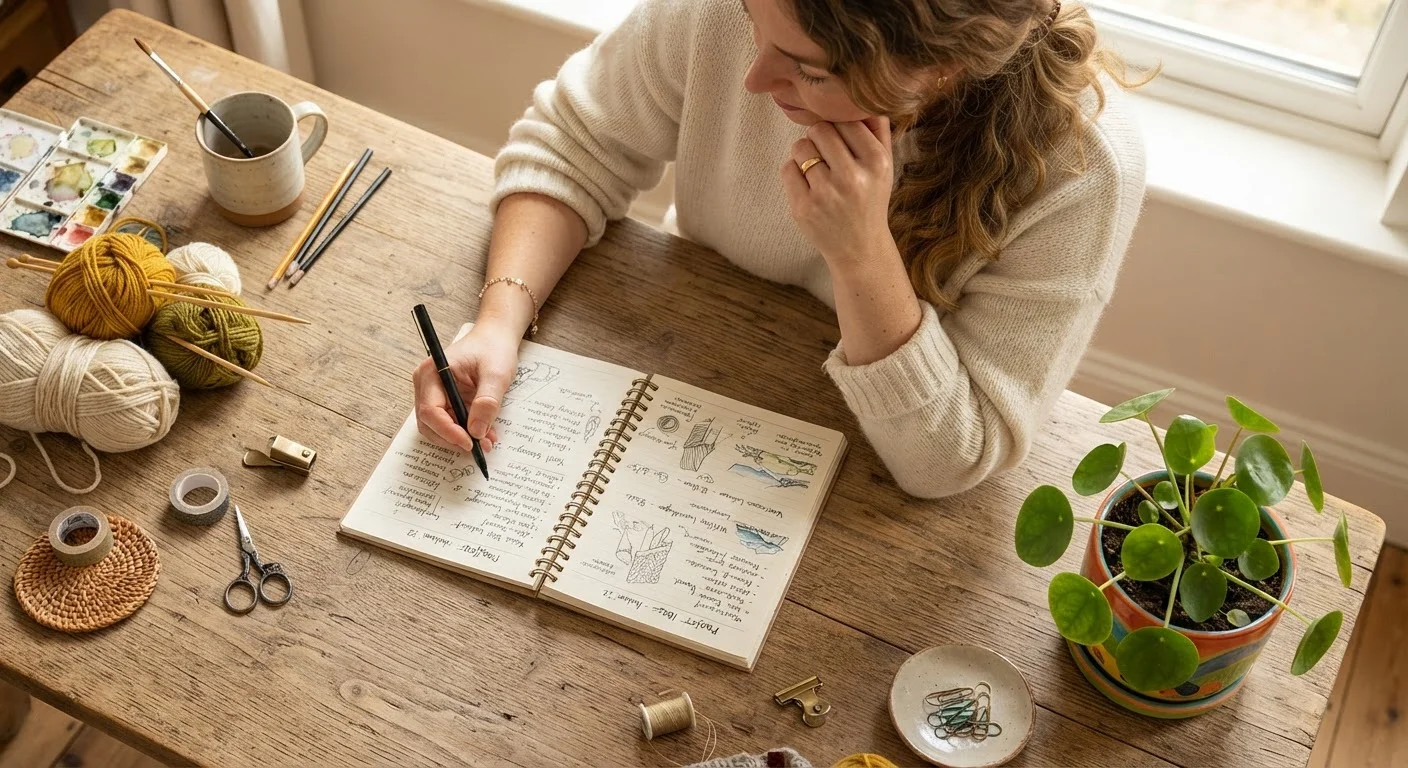
Designate a specific physical space - however small - as your creative area.
Environmental cues powerfully shape behavior. A dedicated corner, shelf, or table signals to your brain that it's time to create, reducing the mental overhead of setup and transition. It also keeps your materials accessible, which lowers friction.
Define what 'done' looks like for each session before you sit down.
Open-ended creative sessions often stall because there's no clear target. A small, specific goal - finish one stanza, sketch three thumbnails, practice one chord progression - gives the session structure and gives you a win to end on.
Separate drafting and editing into different sessions or distinct time blocks.
Perfectionism is one of the most common reasons creative habits collapse. When making and judging happen simultaneously, the inner critic interrupts the generative state. Keeping them apart protects the creative flow needed to produce raw material.
Track your sessions with a simple log or streak system.
Visible progress creates momentum and makes it psychologically harder to break a chain of effort. Even a paper calendar with an X on each session day gives the brain a concrete reward signal. The log also reveals patterns - when you skip, and why.
Build in low-pressure 'exploration' sessions alongside skill-focused ones.
Relentless skill-building without play can make a hobby feel like homework, leading to burnout and dropout. Scheduled exploration - trying a new technique without any goal - keeps the inherent enjoyment alive and often leads to unexpected breakthroughs.
For a broader look at how these principles apply across all types of leisure activities, our article on building any hobby habit covers the mechanics of consistency in more depth.
Start Small: Quick Actions You Can Take Today
The gap between knowing what works and actually doing it is often just inertia. The fastest way through that gap is a concrete action taken immediately - not a plan for later.
It's also worth considering whether practicing alongside others might help your consistency. Creative communities offer accountability and feedback that solo practice can't replicate - something worth exploring once your own rhythm is established.
Sustaining the Practice Over Time
Even a well-structured creative practice hits rough patches. Motivation fluctuates, schedules shift, and creative blocks are genuinely normal - not signs that you should stop. The hobbyists who persist longest tend to treat their practice as a non-negotiable part of their routine rather than something they do when everything else is in order.
“A small daily task, if it be really daily, will beat the labours of a spasmodic Hercules.”
— Anthony Trollope, Victorian novelist and prolific creative practitioner
Trollope's observation - made while maintaining a demanding writing schedule alongside a full career - remains as relevant as ever. Regularity, not intensity, is what compounds into real creative growth. For a deeper look at why making things feels rewarding even when it's difficult, see our piece on the psychology of creative activity.
Finally, remember that a sustainable creative hobby is part of a larger picture - from choosing your medium to managing supplies and navigating creative blocks. Our end-to-end guide to creative arts as a lasting hobby ties all of these threads together if you want a fuller view of what you're building toward.